

Bubble Pre-Washing vs Ultrasonic Cleaning: How to Choose for a Commercial Kitchen
Choose a commercial kitchen cleaning approach by comparing the task, ware, loading method, workflow and information needed for a supplier review.
SourcePro Editorial Team
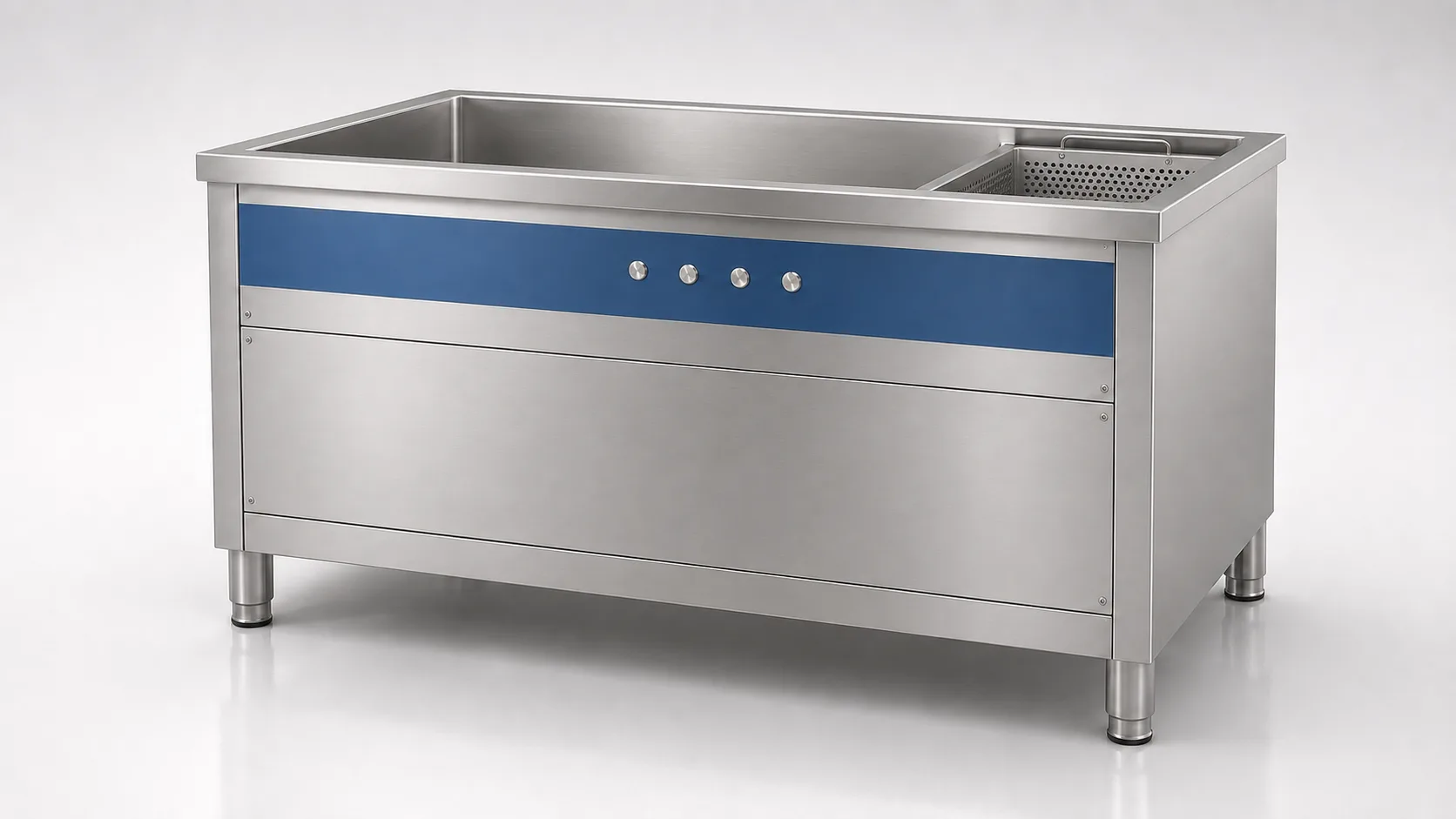
A dishroom may need help with food residue before the main wash, or with a separate batch of utensils that is difficult to clean. These are different purchasing questions. Start by identifying where the current process slows down, which items are involved and what happens after that cleaning step.
A useful shortlist connects the cleaning method to the actual task. Compare the proposed process, handling requirements and equipment interfaces before comparing machine size or quotation totals.
Compare the cleaning task first
Use this table to prepare supplier questions. Final suitability depends on the ware, soil and selected configuration.
Where bubble pre-washing fits
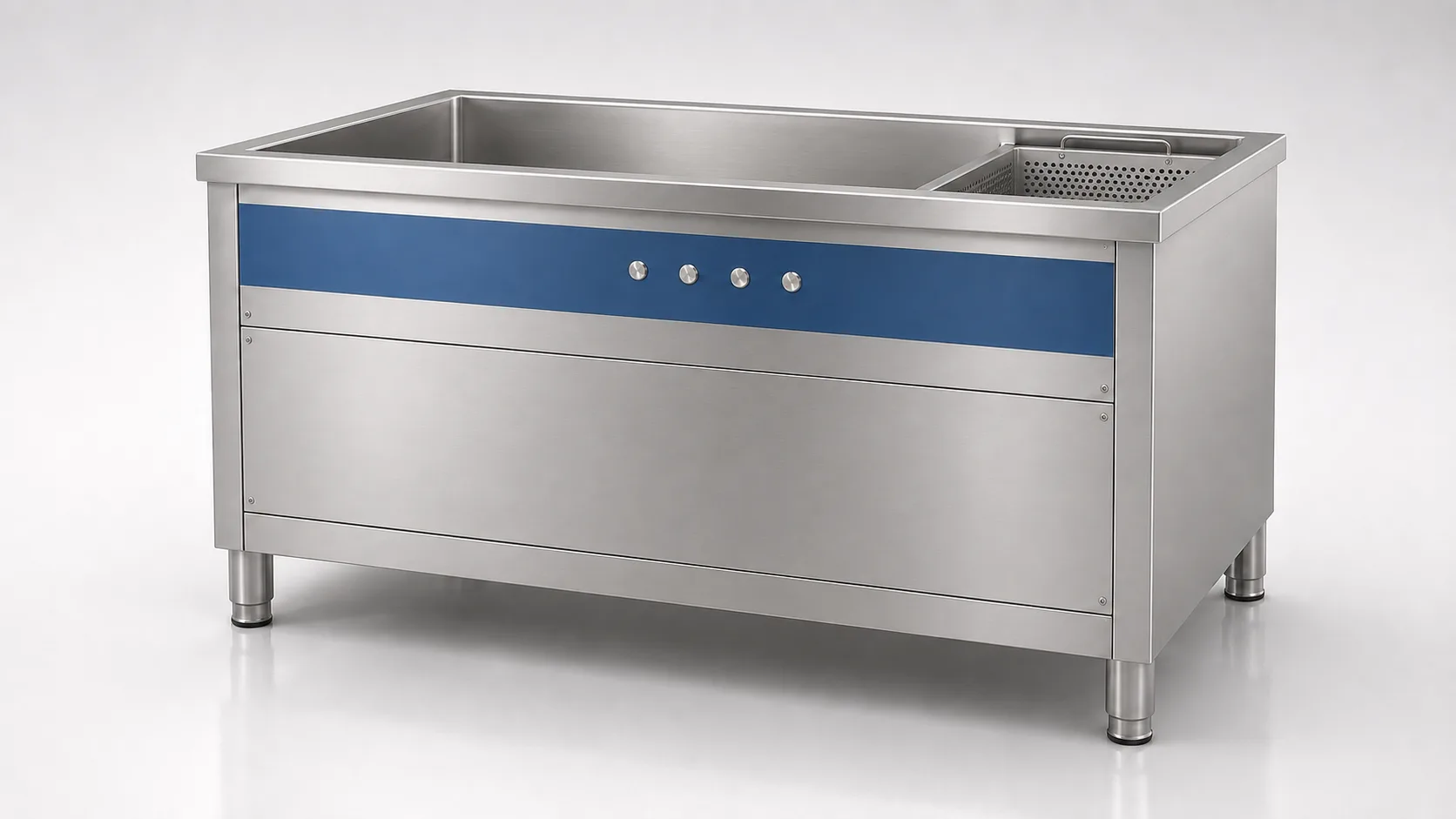
A bubble pre-washing machine can be considered at the dirty-dish end of a line. In SourcePro's reference arrangement, water movement helps loosen food residue and a side collection section captures larger solids.
Review how the operator sorts items, removes collected waste and transfers tableware to the main dishwasher. Include draining and routine cleaning in the operating discussion.
What ultrasonic cleaning adds
Ultrasonic cleaning uses sound waves to produce cavitation in the cleaning liquid. The action can help detach contamination from immersed surfaces. Results depend on the item, cleaning liquid and operating conditions.
For an ultrasonic cleaning station, check the largest item's dimensions and the usable basket space. Have the supplier assess coatings, decorations, glued parts and other material-sensitive items. State how each batch will be rinsed and moved onward.
Two purchasing situations
A busy plate-return area. A hypothetical restaurant already has a main dishwasher, but staff spend time handling food residue before rack loading. First review sorting, pre-wash handling and the transfer into the existing machine. A bubble pre-wash proposal should be assessed against that specific bottleneck.
A separate utensil batch. A hypothetical kitchen wants to review cleaning for selected utensils or cookware. Investigate an ultrasonic trial with representative items and an agreed procedure. Confirm who loads, unloads, rinses and checks each batch.
These examples describe a review method. They do not prescribe a standard equipment package.
Ask for a representative trial where available
A useful trial request explains what the buyer needs to learn. Provide:
- Photos, materials and dimensions of representative items.
- Examples of the actual food soil and how long it normally remains before cleaning.
- A realistic loading arrangement rather than a single easy item.
- The proposed preparation, cleaning, rinsing and handling steps.
- An agreed method for reviewing the result and any material changes.
Record the conditions with the result. A successful demonstration supports the tested combination; ask what still needs checking for the intended workload. Agree which checks belong to the equipment supplier and which need the site's responsible reviewer.
Compare the complete working process
A large tank or a short stated cleaning cycle does not describe the complete operating sequence. Include loading, preparation, unloading, rinsing, waste removal and routine cleaning when discussing practical demand.
For an ultrasonic proposal, ask for ultrasonic output to be identified separately from heating and total electrical load. For either option, request the exact model's utility requirements and operating instructions.
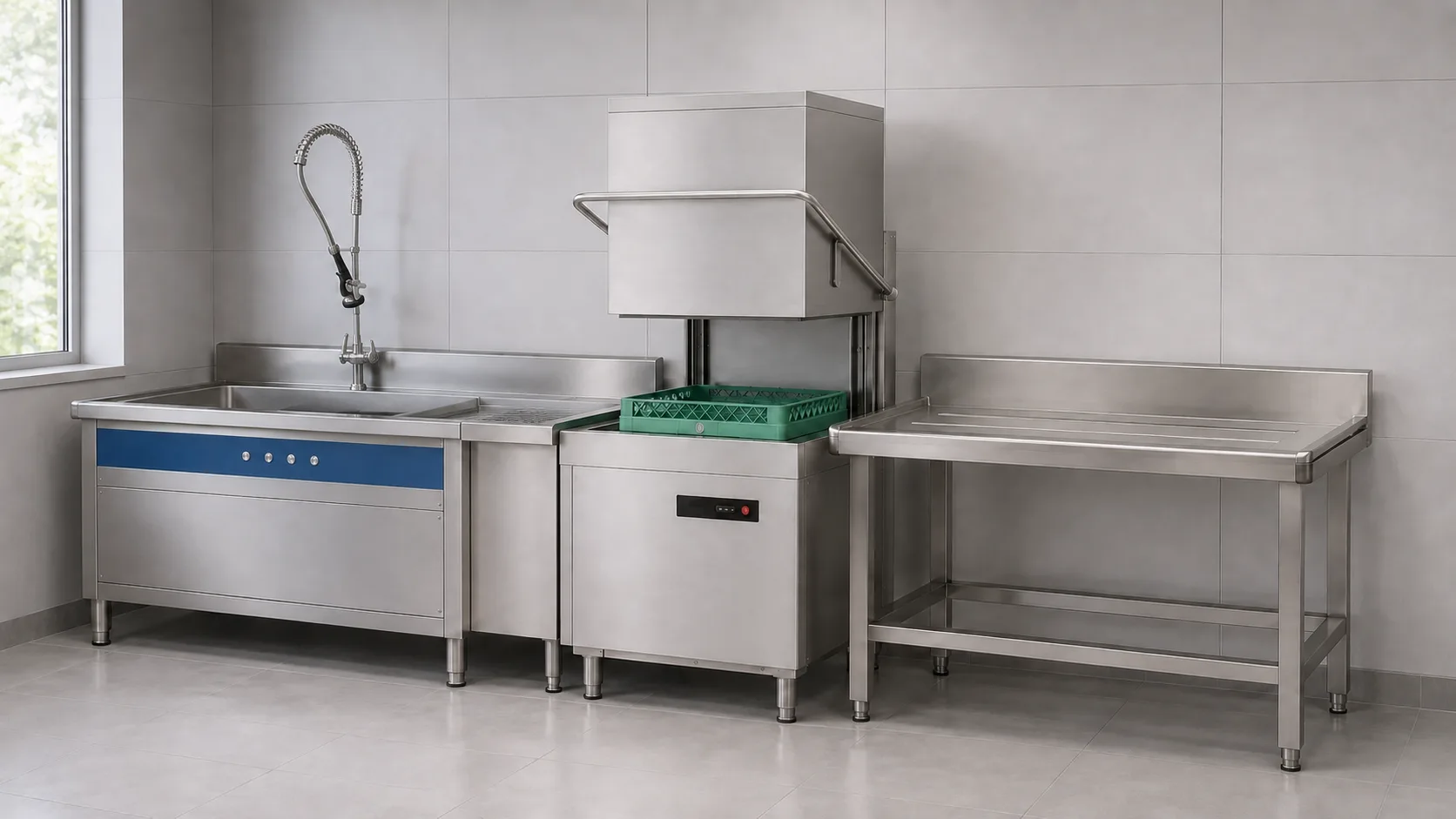
Review the equipment within the dishwashing-area workflow. Check the surrounding working area, dirty-to-clean movement and operator access. Connecting equipment requires a confirmed layout and interface dimensions.
Where the project includes several stages, use a complete commercial dishwashing system review to define the role of each module.
Prepare a clear quotation request
Send the supplier one project brief containing:
- The facility, destination and cleaning task to be addressed.
- The main items, materials, largest dimensions and representative photos.
- Peak demand or batch demand, together with the time available.
- Equipment being retained and its confirmed model or drawings.
- Available space, preferred direction and delivery access.
- Verified electrical, water and drainage information.
- Required accessories, documentation and delivery responsibilities.
For the main machine, the commercial dishwasher buying guide provides a separate selection checklist.
Ask each supplier to identify included items, exclusions and unresolved questions against the same brief. Keep an alternative configuration on a separate line so its differences remain visible.
Discuss your cleaning requirements
Send SourcePro photos of the items to be cleaned, the current difficulty, the largest item dimensions, peak workload, site layout and destination. We can review equipment directions and coordinate the next sourcing discussion. Final configuration, suitability and commercial scope are confirmed for the selected supplier and project.
Continue Reading
Related Buyer Guides
Continue with guides selected by equipment topic, kitchen application, and related sourcing questions.
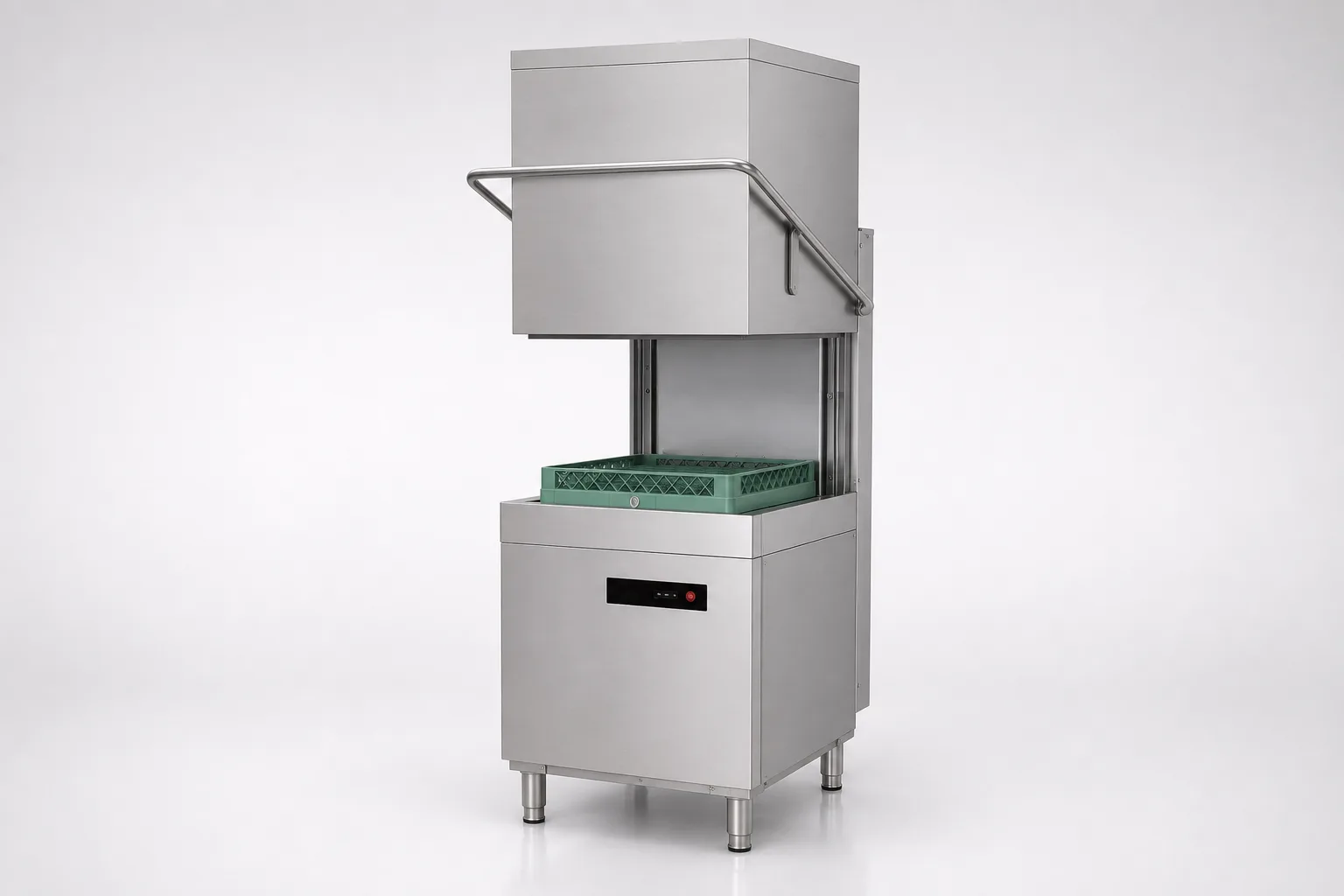
Commercial Dishwasher Buying Guide
Learn how to compare commercial dishwasher types using peak washing demand, dish and utensil mix, rack requirements, utilities and site conditions.
Read Article
304 vs 201 Stainless Steel: Which Is Better for Commercial Kitchens?
Learn how 304 and 201 stainless steel differ for commercial kitchen equipment, including corrosion resistance, cost, and suitable applications.
Read Article
How to Choose Stainless Steel Equipment for a Restaurant Kitchen?
A practical guide to selecting stainless steel tables, sinks, shelves, and support equipment for restaurant kitchen workflows.
Read ArticleRelated Products
Product Pages Mentioned in This Topic
Washing Equipment
Bubble Pre-Washing Machine
Loosens attached food residue, captures larger solids in a side filtration section and prepares tableware for the main dishwasher.
View Details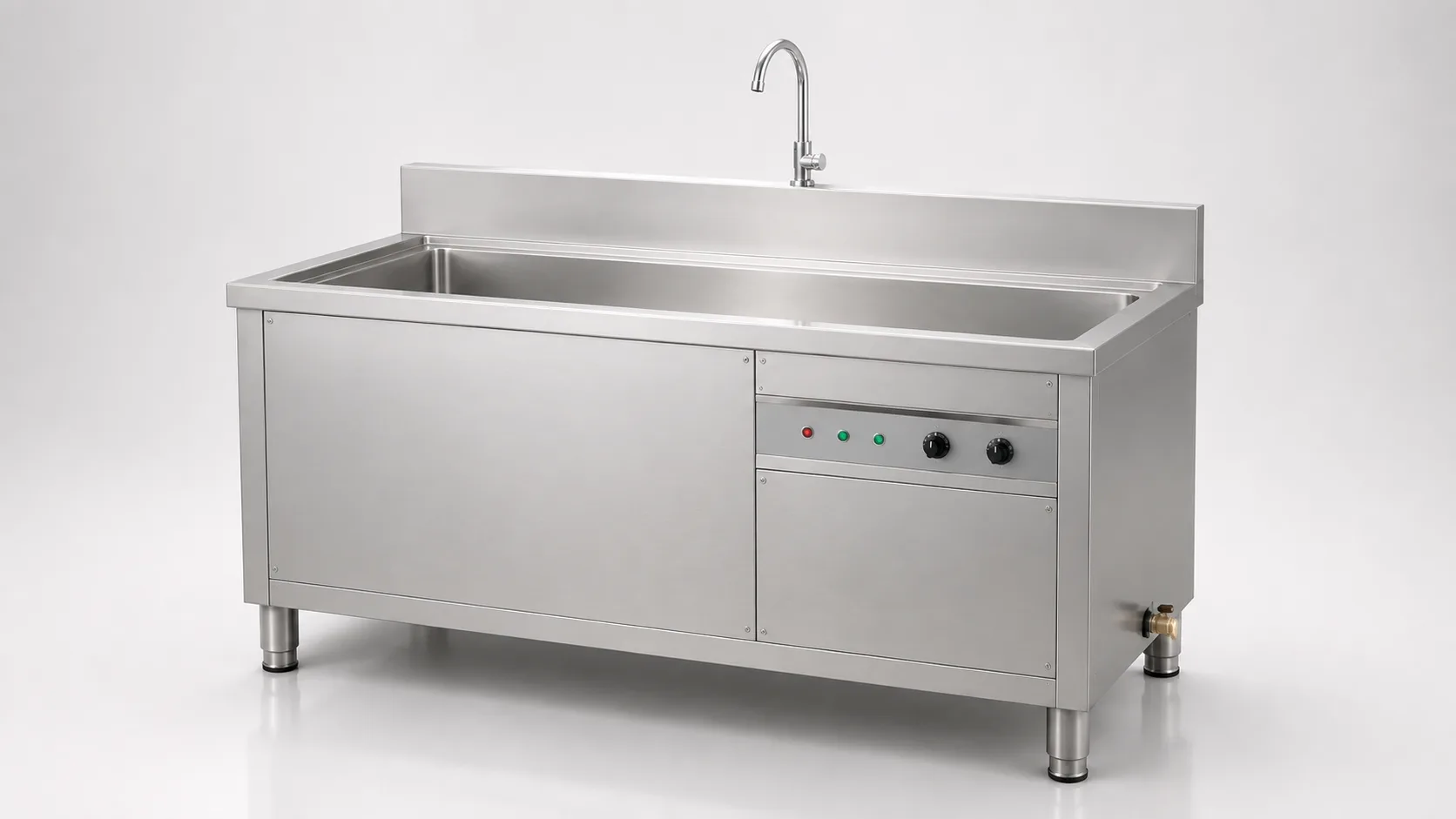
Washing Equipment
Ultrasonic Dishwasher
Uses ultrasonic cavitation in a stainless steel tank to support batch cleaning of selected tableware, utensils and cookware.
View DetailsRelated Solutions
Solution Pages Connected to This Article
FAQ
Common Questions
Does bubble pre-washing complete the dishwashing process?
It is a preparation stage in the reference line discussed here. Specify the following main wash and final rinse when reviewing the proposal.
Can ultrasonic cleaning be used for every kitchen item?
Suitability needs checking for the actual item, material and procedure. Ask for representative testing where available, particularly for coated, decorated or assembled items.
Does a bigger tank mean higher practical throughput?
Compare usable loading space and the complete batch-handling process. Request a capacity explanation based on the items and workload in your brief.
Should a kitchen buy both machines?
Add a module when it has a defined task in the proposed process. Ask the supplier to explain its role, interfaces and operating requirements before including it.
Equipment Support
Need help selecting commercial kitchen equipment?
Share your kitchen type, product list, material or voltage requirements, destination country, and sourcing questions. SourcePro will review your inquiry and help organize suitable equipment directions.
Request a Quote