

Product Detail
Commercial Steam-Jacketed Kettle
Configure a steam-jacketed kettle around the product, viscosity, batch, jacket system, discharge, mixing requirement, material and utilities.
Overview
Product Overview
A steam or self-contained jacket transfers heat around the vessel for soups, stocks, sauces and other batch products requiring even heating. The confirmed jacket architecture separates this family from direct-heated induction soup pots and open kettles. Direct-steam and self-contained electric or gas, stationary and tilting, tabletop and floor-standing, draw-off and mixer configurations remain under one family. Final usable volume, pressure, steam quality, heat input, material, agitation, safety devices and destination compliance require selected-configuration confirmation.
Key Features
Key Features
True jacket-heated vessel for even batch heat transfer
Direct-steam or self-contained electric/gas configurations
Stationary draw-off or tilting discharge arrangements
Tabletop and floor-standing capacity classes
Two-thirds jacket coverage on many official reference systems
Cover, draw-off valve, agitator and scraper options
Pressure, steam quality, material and safety package confirmed by project
Applications
Where This Product Is Used
Soups, stocks and broths
Sauces and pourable products
Institutional and commissary batch cooking
Products requiring mixer or scraper options after trials
Controlled draw-off or tilting discharge workflows
Buyer Benefits
Why Buyers Choose This Type
Direct steam or self-contained electric/gas heat
Tabletop or floor-standing vessel
Stationary or tilting discharge
Alternative usable capacities
Draw-off valve or open-pour lip
Optional agitator, scraper and cover
304 or 316 food-contact construction subject to product review
Technical Data
Specifications
Reference Configuration
Official examples span about 11–950 L across very different tabletop and institutional systems; a common project group is about 45–375 L. Direct-steam examples show roughly 5–45 psi supply with 50 psi jacket limits on selected systems. Mixer examples include 150–375 L and 0–40 rpm agitation. Values stay source-separated.
Configuration Options
Direct steam or self-contained electric/gas heat; Tabletop or floor-standing vessel; Stationary or tilting discharge; Alternative usable capacities; Draw-off valve or open-pour lip; Optional agitator, scraper and cover; 304 or 316 food-contact construction subject to product review
Reference Specifications
Official examples span about 11–950 L across very different tabletop and institutional systems; a common project group is about 45–375 L. Direct-steam examples show roughly 5–45 psi supply with 50 psi jacket limits on selected systems. Mixer examples include 150–375 L and 0–40 rpm agitation. Values stay source-separated.
| Reference configuration | Qualified reference example |
|---|---|
| Tabletop electric tilting references | Separate 11/23/45 L classes; self-contained two-thirds jacket; 50 psi jacket limit; 304 stainless on the cited family. |
| Direct-steam stationary references | 100–950 L across separate sizes; two-thirds jacket; direct steam about 5–45 psi; 50 psi jacket limit on the cited family. |
| Mixer-kettle references | 150/225/300/375 L classes; selected scraper/agitator range about 0–40 rpm; self-contained jacket package. |
Reference configurations are not fixed SourcePro promises. Final model, capacity, dimensions, power, utilities, safety, load basis and compliance are confirmed after inquiry and technical review.
Project Confirmation
Project Confirmation Checklist
Product, viscosity and required process
Batch size and usable volume
Direct steam or self-contained electric/gas heat
Steam pressure, quality and consumption where applicable
Stationary/tilting and draw-off valve requirements
Agitator, scraper, cover, jacket coverage and 304/316 material
Floor load, water, drain, electrical/gas, pressure safety and destination compliance
Commercial Steam-Jacketed Kettle FAQ
How is a steam-jacketed kettle different from a stock pot?
A jacketed kettle transfers heat through a confirmed steam or self-contained jacket around the vessel. A direct-heated stock pot or induction soup pot does not automatically qualify as steam-jacketed.
Can the kettle use direct steam, electricity or gas?
Official systems exist in direct-steam and self-contained electric or gas forms. The available matrix, pressure package and destination utilities must be confirmed for the selected supplier.
Should I choose a tilting kettle or a draw-off valve?
Tilting supports open-pour discharge, while a draw-off valve suits suitable pumpable or pourable products. Product viscosity, particles, batch and receiving height determine the choice.
Are mixer and scraper options available?
They are available on selected mixer-kettle systems. Agitator type, speed, scraper contact, motor duty and cleanability require product trials and supplier confirmation.
Why is the reference capacity range so broad?
The sources cover tabletop units through large institutional kettles. SourcePro does not present them as one fixed range; the project is narrowed by product, batch and utility conditions.
Product Inquiry
Configure Your Steam-Jacketed Kettle
Share the product, viscosity, batch, steam or self-contained heat preference, tilt or valve discharge, mixing and site utilities. SourcePro will align a qualified kettle configuration for review.
Configure Your Steam-Jacketed KettleRelated Products
Related Commercial Cooking Equipment
Commercial Cooking Equipment
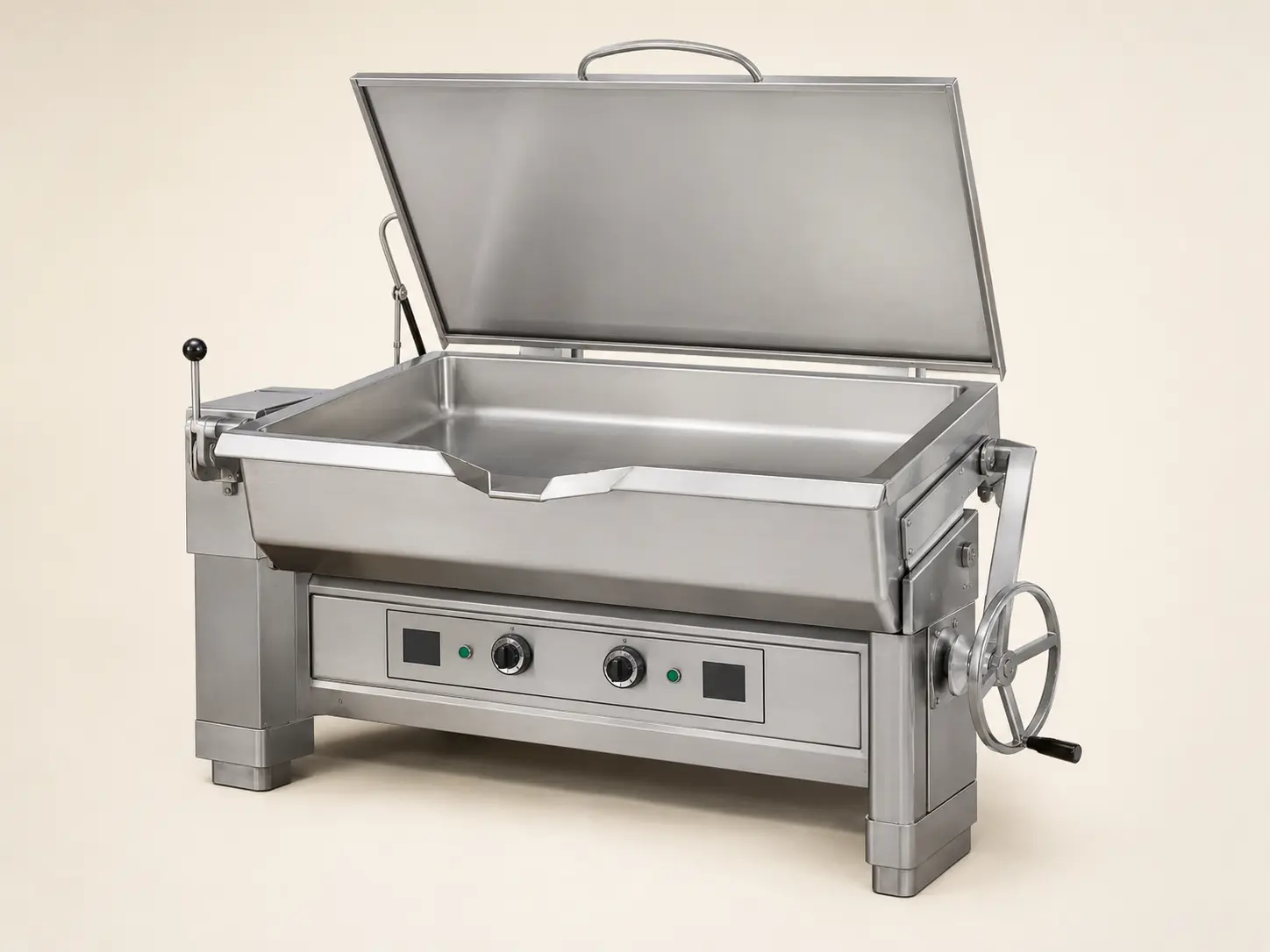
Commercial Tilting Braising Pan
Configure a commercial tilting braising pan by product, batch, pan geometry, energy, temperature control, tilt, discharge and utilities.
View Details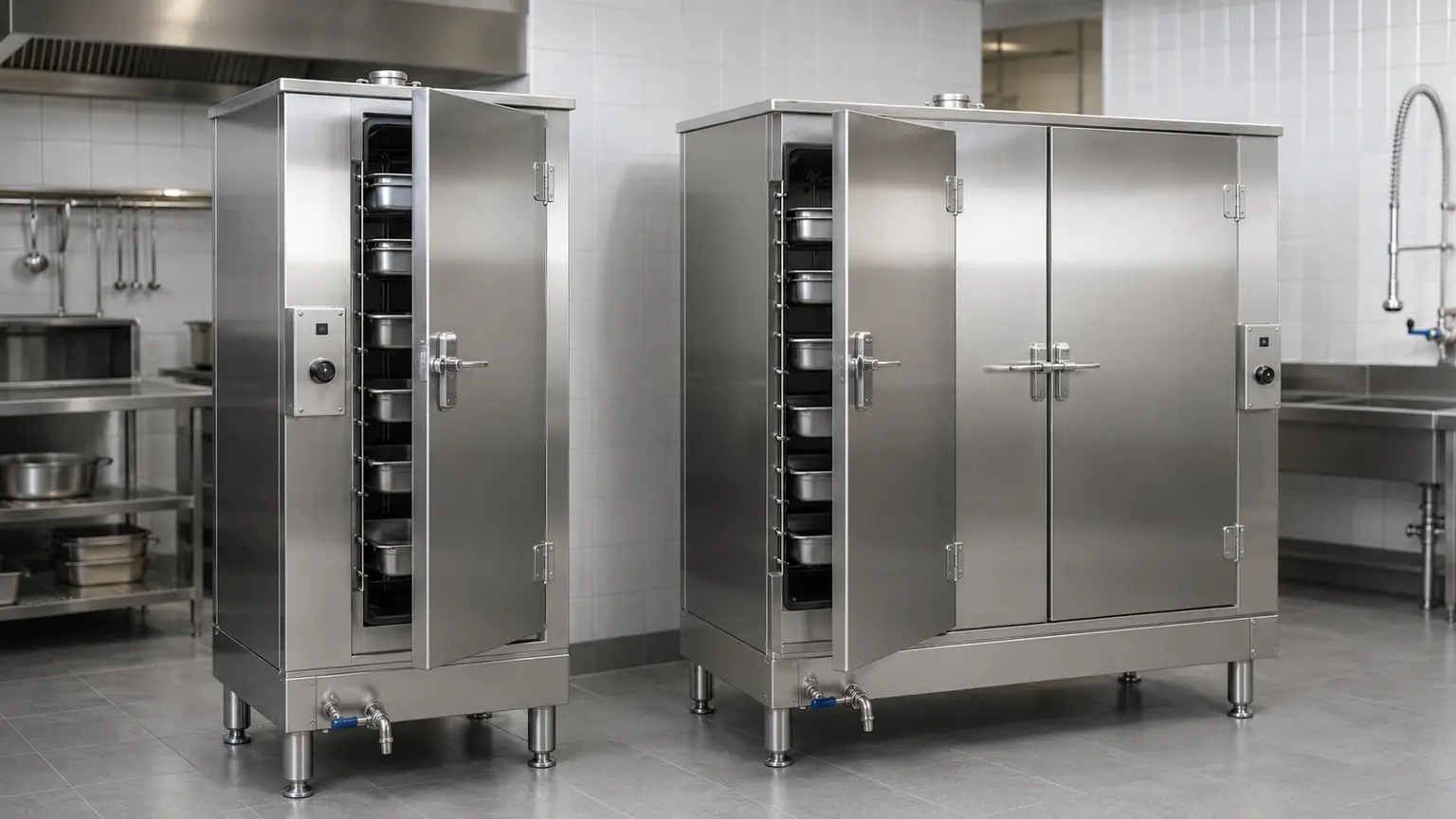
Commercial Cooking Equipment
Commercial Steaming Cabinet
Compare commercial steaming cabinets by tray format, single or double doors, electric or gas heating, controls, utilities and batch requirements.
View Details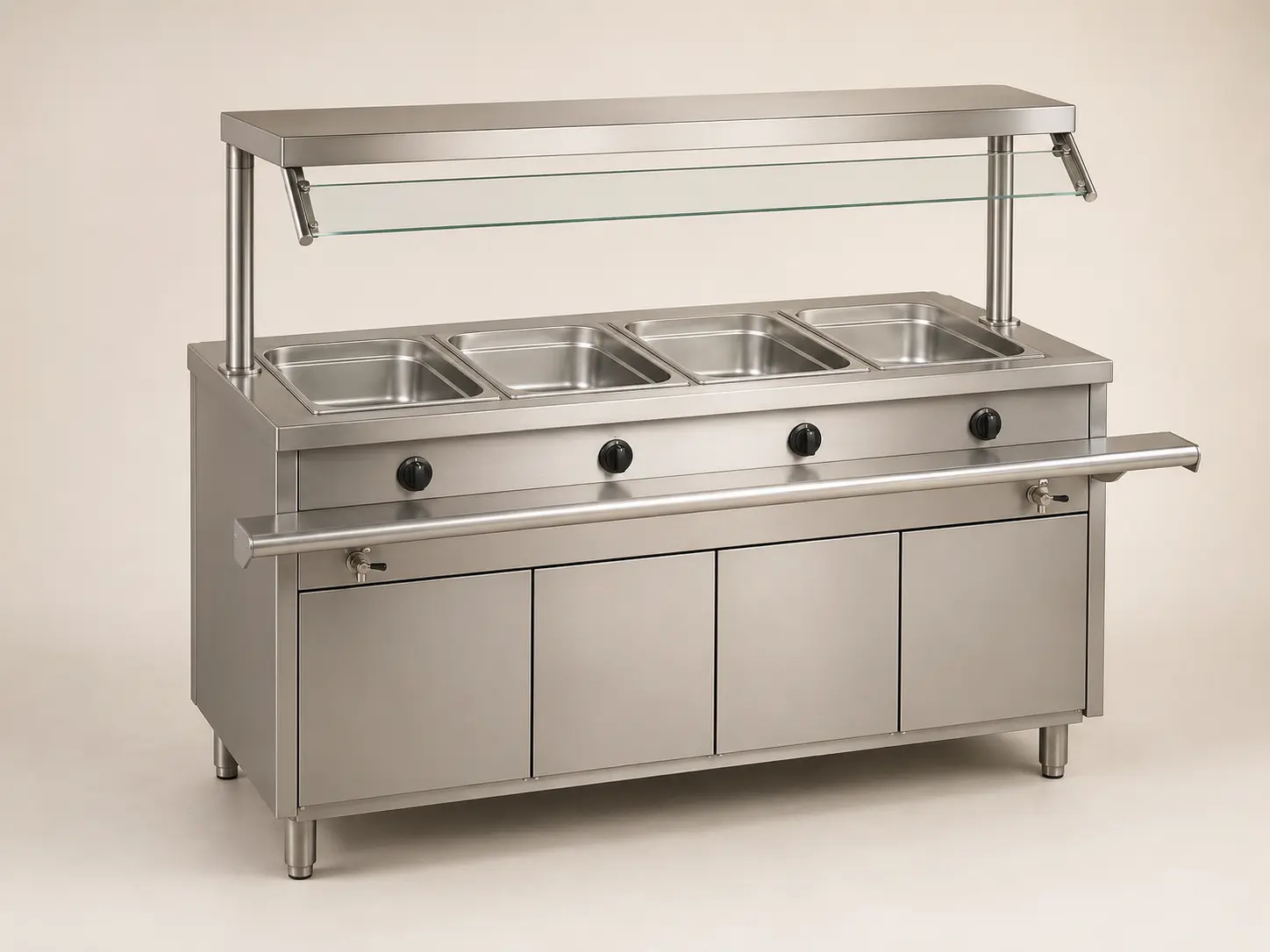
Commercial Cooking Equipment
Commercial Bain-Marie & Heated Serving Counter
Configure a commercial bain-marie by holding duty, pan standard, well count, wet or dry operation, controls, counter format and utilities.
View Details