

Product Detail
Commercial Automatic Tray Washer
Configure an automatic tray washer around the tray geometry, soil load, peak flow, loading and stacking automation, wash and dry zones and site utilities.
Overview
Product Overview
This family is a dedicated continuous system for institutional serving trays. Adjustable tray guidance, washing, final rinse, drying and optional automatic stacking distinguish it from general flight-type dishwashers and cabinet-style pot and utensil washers. Tray speed, guide, flow direction, drying, heat recovery and stacking remain configurations under one canonical. The current official source conflicts between trays per minute and trays per hour, so no fixed throughput is published until written confirmation resolves the unit.
Key Features
Key Features
Dedicated single-tray guided conveyor path
Wash action above and below the tray
Hot fresh-water final rinse followed by a separate drying zone
Adjustable guides for supported tray profiles
Automatic discharge stacking and trolley changeover options
Optional heat recovery and integrated exhaust treatment
Line direction, guarding, drainage and service access confirmed with the layout
Applications
Where This Product Is Used
Institutional dining and staff canteens
Hospitals, schools and central kitchens
Airline, event and high-volume catering
Cafeteria tray return systems
Standardized serving trays validated against the selected guide envelope
Buyer Benefits
Why Buyers Choose This Type
Alternative supported tray profiles and guide settings
Manual or automated loading interface
Wash, final-rinse and drying-zone arrangements
Automatic discharge stacker and tray trolley integration
Left-to-right or right-to-left line flow
Heat-recovery and exhaust options
Water, electrical and sanitation package after engineering review
Technical Data
Specifications
Reference Configuration
Separate official model rows list final-rinse water around 150–225 L/h, tank volume 60 L, drying airflow 200–400 m³/h and total connected load about 29–47 kW depending on model, inlet-water temperature and heat recovery. Throughput is deliberately excluded because the same source conflicts between trays/min and trays/h.
Configuration Options
Alternative supported tray profiles and guide settings; Manual or automated loading interface; Wash, final-rinse and drying-zone arrangements; Automatic discharge stacker and tray trolley integration; Left-to-right or right-to-left line flow; Heat-recovery and exhaust options; Water, electrical and sanitation package after engineering review
Reference Specifications
Separate official model rows list final-rinse water around 150–225 L/h, tank volume 60 L, drying airflow 200–400 m³/h and total connected load about 29–47 kW depending on model, inlet-water temperature and heat recovery. Throughput is deliberately excluded because the same source conflicts between trays/min and trays/h.
| Reference configuration | Qualified reference example |
|---|---|
| Automatic tray handling architecture | Guided conveyor transports, washes, final-rinses, dries and stacks trays; optional heat recovery and discharge stacker — Architecture only; brand/model stays internal |
| Qualified utility examples | Final rinse 150–225 L/h; tank 60 L; drying airflow 200–400 m³/h; connected load about 29–47 kW depending on model, inlet temperature and heat recovery — Each value remains tied to its model and inlet/recovery condition (source confirmation required) |
Reference configurations are not fixed SourcePro promises. Final model, capacity, dimensions, power, utilities, safety and compliance are confirmed after inquiry and technical review.
Project Confirmation
What We Confirm for Your Project
Tray material, dimensions, profile, orientation and sample availability
Food soil and pre-scraping or waste-removal workflow
Peak tray flow with explicit per-minute or per-hour time basis
Manual/automatic loading, discharge stacking and trolley interface
Line direction and wash, rinse and drying-zone requirements
Water temperature, pressure, quality, drainage, exhaust and heat recovery
Power, footprint, access, guarding and destination hygiene requirements
Commercial Automatic Tray Washer FAQ
How is an automatic tray washer different from a flight-type dishwasher?
It is dedicated to standardized serving trays with guided transport, drying and optional stacking. A general flight-type machine handles a broader mix of washware.
What information is needed to confirm tray-washer throughput?
Provide tray dimensions, the expected peak load and the required washing process. Confirm throughput in writing for the selected line, including whether the rate is measured per minute or per hour.
Can the machine handle different tray sizes?
Adjustable guides may support different profiles, but tray drawings or samples, orientation and the validated envelope are required.
Can loading and stacking be automated?
Automatic loading interfaces and discharge stacking are configuration options. The complete return-line workflow and tray trolley interface must be reviewed.
Which utilities must be confirmed?
Water temperature, pressure and quality, drainage, exhaust, electrical load, heat recovery, floor space and service access all require project confirmation.
Product Inquiry
Configure Your Automatic Tray Washer
Provide tray drawings or samples, soil type, peak flow and time basis, loading and stacking workflow, line direction and site utilities. SourcePro will coordinate a source-confirmed tray-washing line for quotation and layout review.
Configure Your Automatic Tray WasherRelated Products
Related Washing Equipment
Washing Equipment
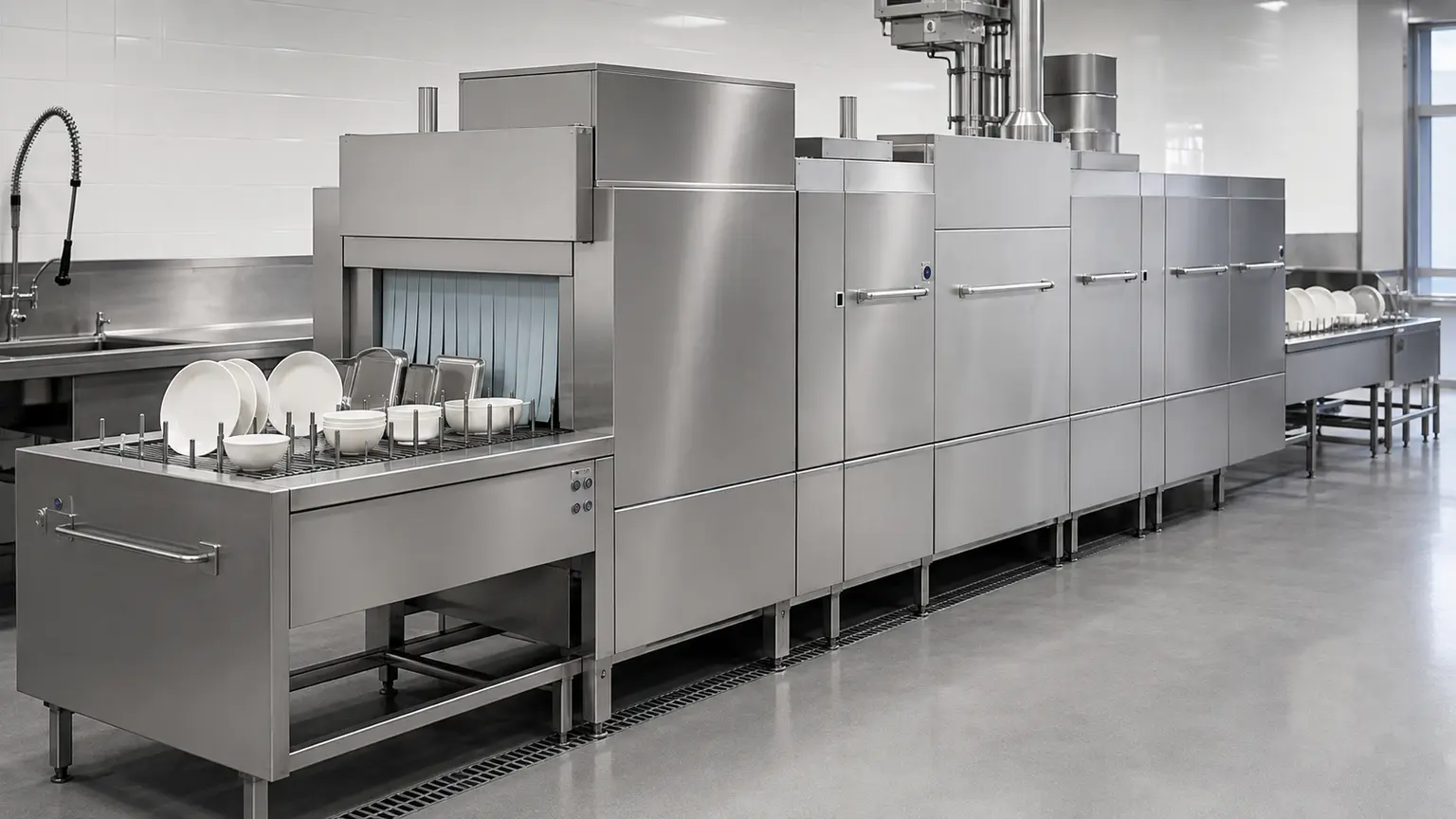
Commercial Flight-Type Conveyor Dishwasher
Plan a high-volume direct-loading flight-type conveyor dishwasher around your ware mix, throughput, wash zones, utilities and dishroom layout.
View Details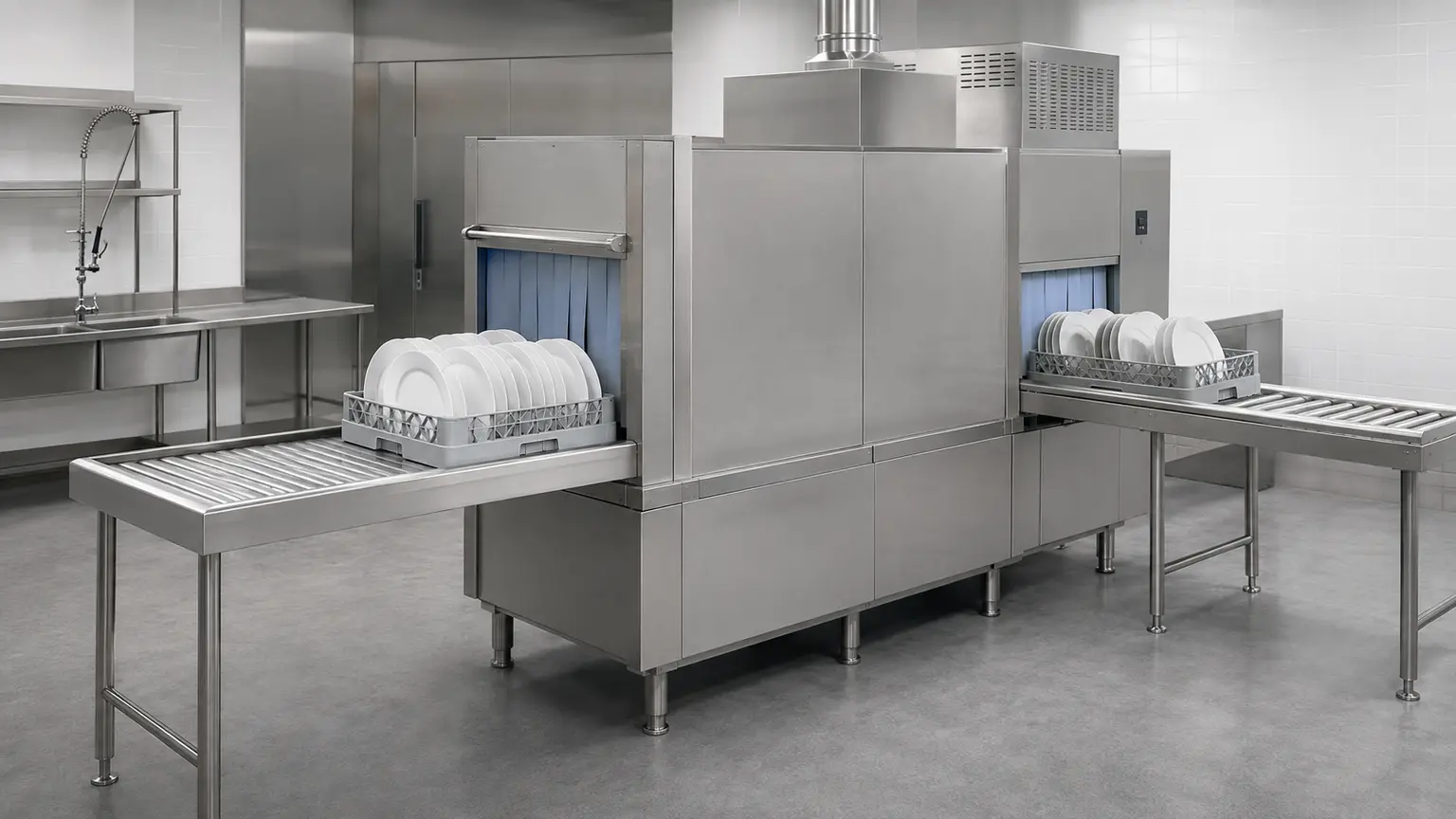
Washing Equipment
Commercial Rack Conveyor Dishwasher
Configure a rack conveyor dishwasher around rack size, racks per hour, pass height, tunnel modules, utility conditions and dishroom tables.
View Details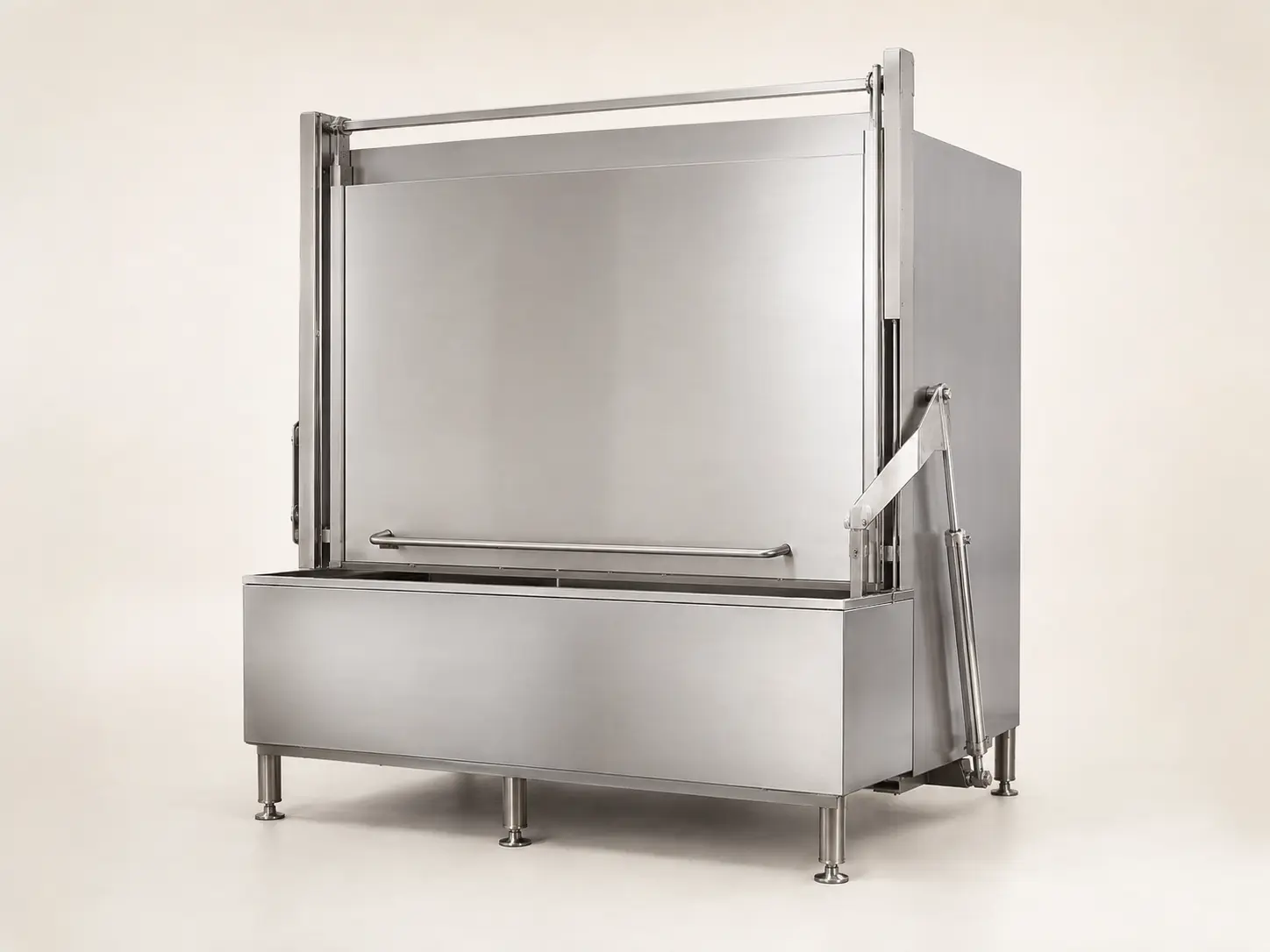
Washing Equipment
Commercial Pot, Pan & Utensil Washer
Configure a high-chamber commercial washer for pots, pans, trays and utensils by ware size, soil, cycle workflow, utilities and sanitation needs.
View Details