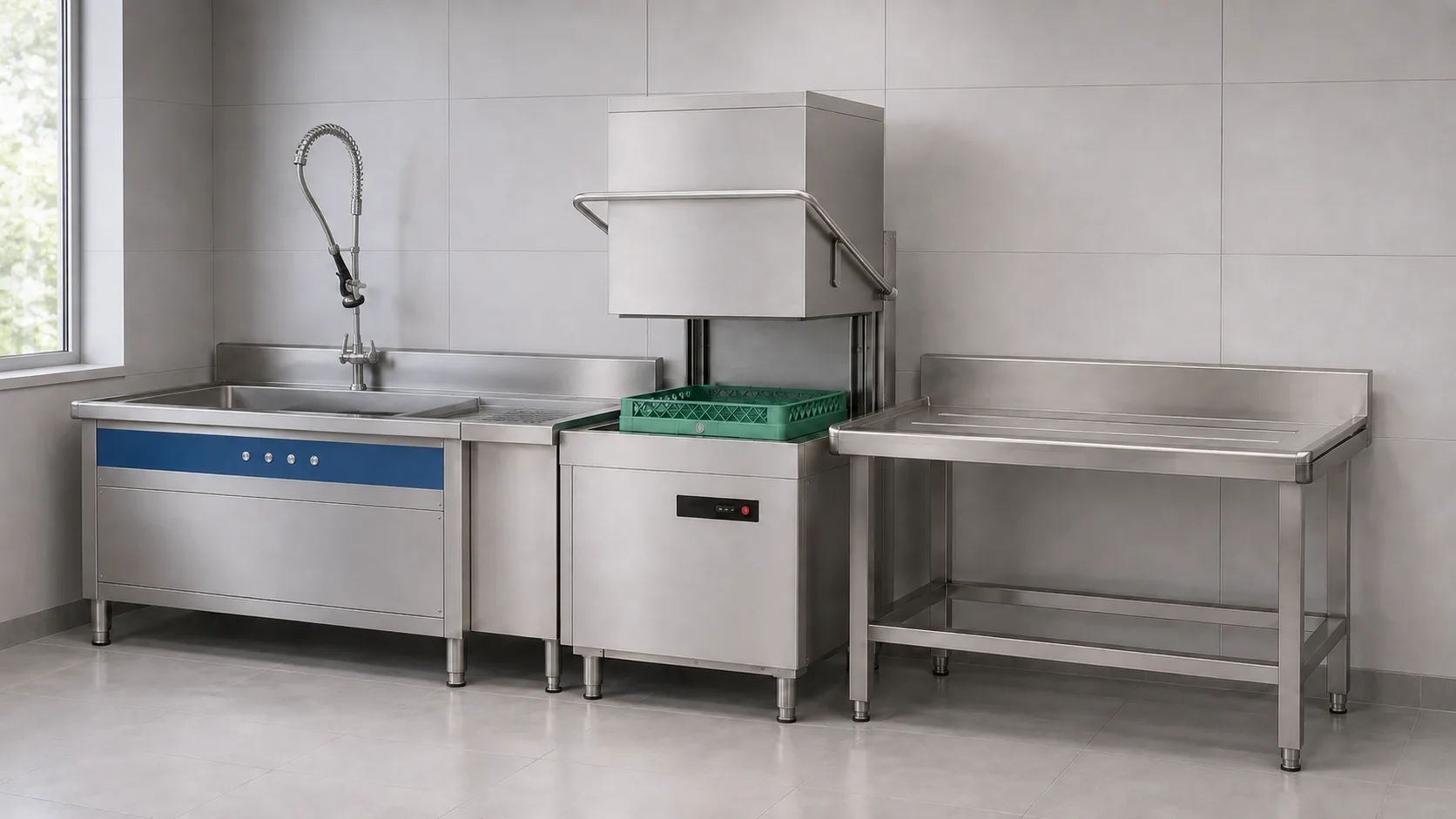

Rack-Fed Tunnel Warewashing
Commercial Rack Conveyor Dishwasher
SourcePro commercial rack conveyor dishwashers move preloaded dish racks through a continuous wash and final-rinse tunnel, providing an efficient route between undercounter or hood-type machines and large direct-loading flight systems. The layout can be configured around rack dimensions, pass height, target racks per hour, heating method, drying, heat recovery and inlet or outlet tables. Published figures are reference selection ranges across different series; the final machine and utility schedule are confirmed after the buyer's workflow and site conditions are reviewed.
Overview
Product Overview
A rack conveyor dishwasher is suited to medium- and high-volume dishrooms that already use standardized racks and want a repeatable rack-fed process. Procurement should focus on rack format, practical racks-per-hour demand, pass height, table layout, water conditions and the required wash, rinse and drying sections.
Key Features
Key Features
Compact single-tank and extended multi-tank tunnels
Common 500 × 500 mm rack references, subject to final rack confirmation
Optional prewash or power-scrap sections
Electric, steam-assisted or other approved heating arrangements
Optional drying and heat-recovery modules
Straight, corner or project-specific inlet and outlet table integration
Applications
Where This Product Is Used
Hotels and resorts
restaurants with central dishrooms
hospitals
schools and universities
staff dining facilities
banquet kitchens
medium- to high-volume catering operations.
Buyer Benefits
Why Buyers Choose This Type
Continuous rack-fed operation — standardized dish racks move through the tunnel with less manual lifting between stages.
Compact high-volume format — a rack system can deliver tunnel productivity in a shorter footprint than many flight-type lines.
Configurable process zones — prewash, main wash, final rinse, drying and recovery functions can be selected by project.
Table and conveyor integration — dirty-side loading, rack transport and clean-side unloading can be planned together.
Ware-clearance control — pass height and rack selection can be matched to plates, trays, utensils and selected cookware.
Site-specific utilities — booster, heating, electrical load, water treatment, drainage and exhaust are confirmed for the installation.
Technical Data
Specifications
Reference Configuration
Single-tank, multi-tank, heating, drying, heat-recovery and throughput variants belong under one rack conveyor family page. Do not create separate indexed pages for rack rate or tank count.
Reference Specifications / Configurations
Planning ranges only. Final values are confirmed for the selected project configuration.
| Display Group | Metric | Public Reference Wording | Buyer Confirmation Required |
|---|---|---|---|
| Capacity | Throughput | International and audited source references span approximately 160–355 racks/h. Practical output depends on rack loading, wash program, soil level and operating method. | Peak racks/h; rack loading standard; ware mix; test basis |
| Rack | Rack format | A 500 × 500 mm rack is a common reference. Confirm the exact rack footprint, grid, handling system and local availability. | Rack dimensions; rack type; existing rack fleet; ware supports |
| Clearance | Pass height | Approximately 450–508 mm across cited international and catalog references. | Tallest item; rack loading; tray or cookware clearance |
| Footprint | Machine envelope | Approximately 1.10–2.89 m long × 0.73–0.80 m deep × 1.67–1.93 m high across different tunnel configurations, excluding project tables where noted. | Machine and table layout; access; flow direction; service clearance |
| Electrical | Connected load | Cited electric configurations are approximately 37.7–66.9 kW. Booster, heating source, recovery and drying materially change the final load. | Voltage; phase; heating; booster; recovery; simultaneous demand |
| Water | Rinse / working water reference | Water demand varies by rack size, cycle and tunnel configuration. Confirm total water and final-rinse water separately; do not publish a fixed consumption value until the test basis is verified. | Water metric; inlet conditions; treatment; booster; rinse standard |
The information shown is a reference configuration range for project planning. Final model, dimensions, capacity, power, voltage, gas type, utilities and options are confirmed after enquiry review and approved drawings.
Project Confirmation
What We Confirm for Your Project
Peak racks per hour — Number + peak duration
Rack dimensions and existing rack system — L × W × H + rack type
Ware mix and largest item — Description + dimensions
Rack-loading and capacity test basis — Items per rack + operating assumptions
Tank and process-zone requirements — Single/multi-tank + options
Heating source and booster requirement — Electric / steam-assisted / other
Voltage, frequency, phase and available load — V / Hz / phase / kW or A
Water conditions and consumption basis — °C / pressure / hardness / metric definition
Flow direction and inlet/outlet table plan — Marked-up plan
Drying and heat recovery — Required / optional / not required
Detergent and rinse-aid dosing interface — Existing/new system + connection
Destination standards and documents — Country/region + required certificates
Commercial Rack Conveyor Dishwasher FAQ
What is a rack conveyor dishwasher?
It is a tunnel-style commercial dishwasher that moves preloaded dish racks continuously through wash and final-rinse sections. It is intended for dishrooms that use a repeatable rack-based handling process.
What rack size is commonly used?
A 500 × 500 mm rack is a common reference in the audited sources, but the exact rack footprint, grid, ware supports and compatibility with the site's existing racks must be confirmed.
How is racks-per-hour capacity selected?
Use the peak return rate, rack-loading standard, ware mix, soil level and operating window. Catalog rack rates are reference test values and may not equal practical output in every dishroom.
Can a drying section be added?
Drying may be available as a project module. Confirm the ware material, expected residual moisture, available tunnel length, exhaust arrangement and additional electrical or steam demand.
Do inlet and outlet tables form part of the project?
They should be planned with the machine because rack staging, flow direction, corner conditions, operator reach and clean-side unloading affect the overall dishroom performance.
What water information should be confirmed?
Confirm inlet temperature, pressure, hardness, treatment requirements and whether a source figure refers to final-rinse water or total working water. The current source set uses different water definitions.
How should I choose a rack conveyor configuration?
Review peak rack demand, tank count, heating, drying, heat recovery and the inlet and outlet table layout. Confirm the selected rack rate and utilities for the actual ware load before ordering.
Product Inquiry
Match the tunnel to your racks and dishroom plan
Send the required rack size, peak racks per hour, largest ware item, proposed flow direction and site utilities. SourcePro will prepare a reference configuration and buyer-confirmation list for the project.
Request Dishwashing Equipment SelectionRelated Products
Related Washing Equipment
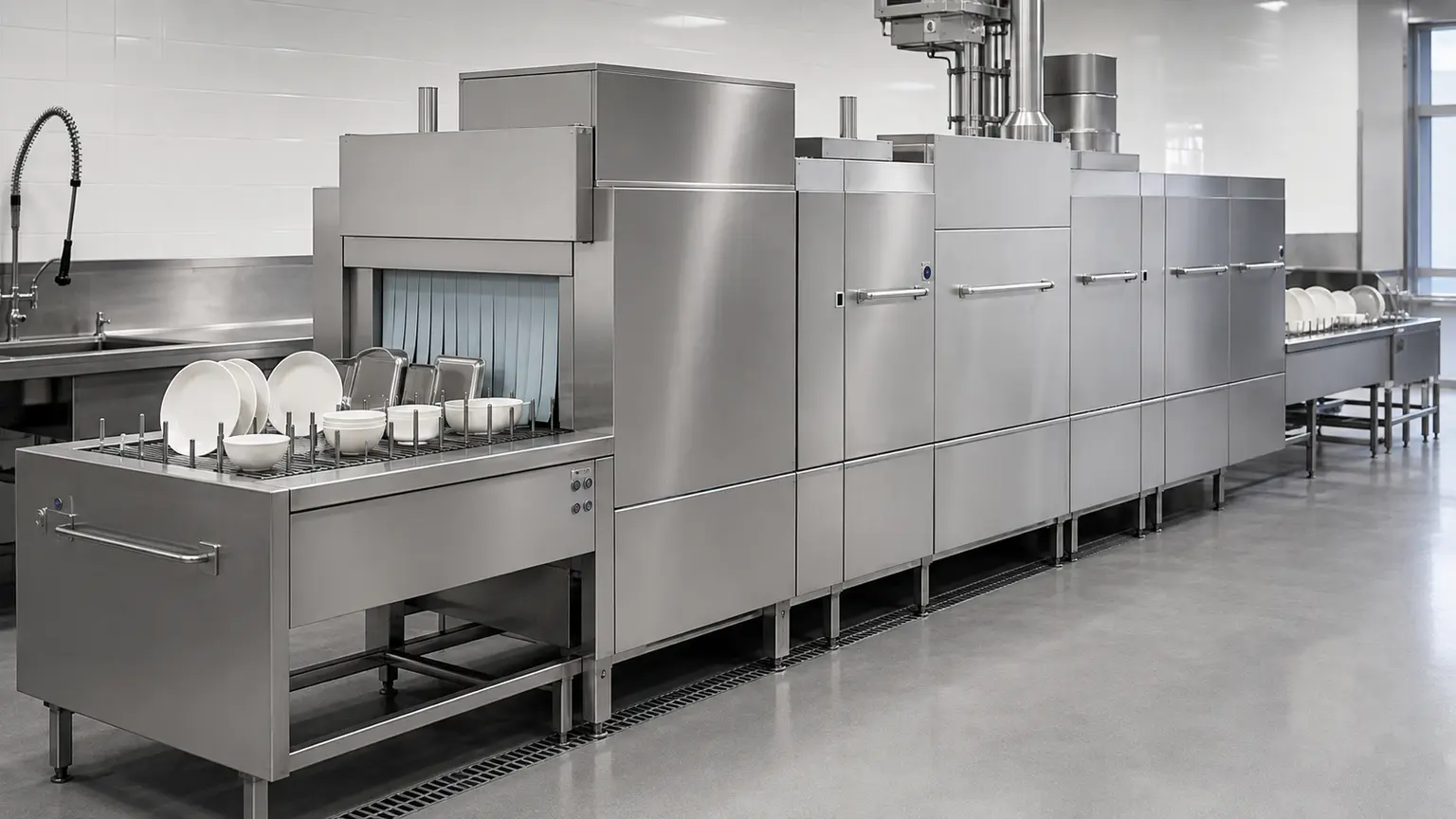
Washing Equipment
Commercial Flight-Type Conveyor Dishwasher
Plan a high-volume direct-loading flight-type conveyor dishwasher around your ware mix, throughput, wash zones, utilities and dishroom layout.
View Details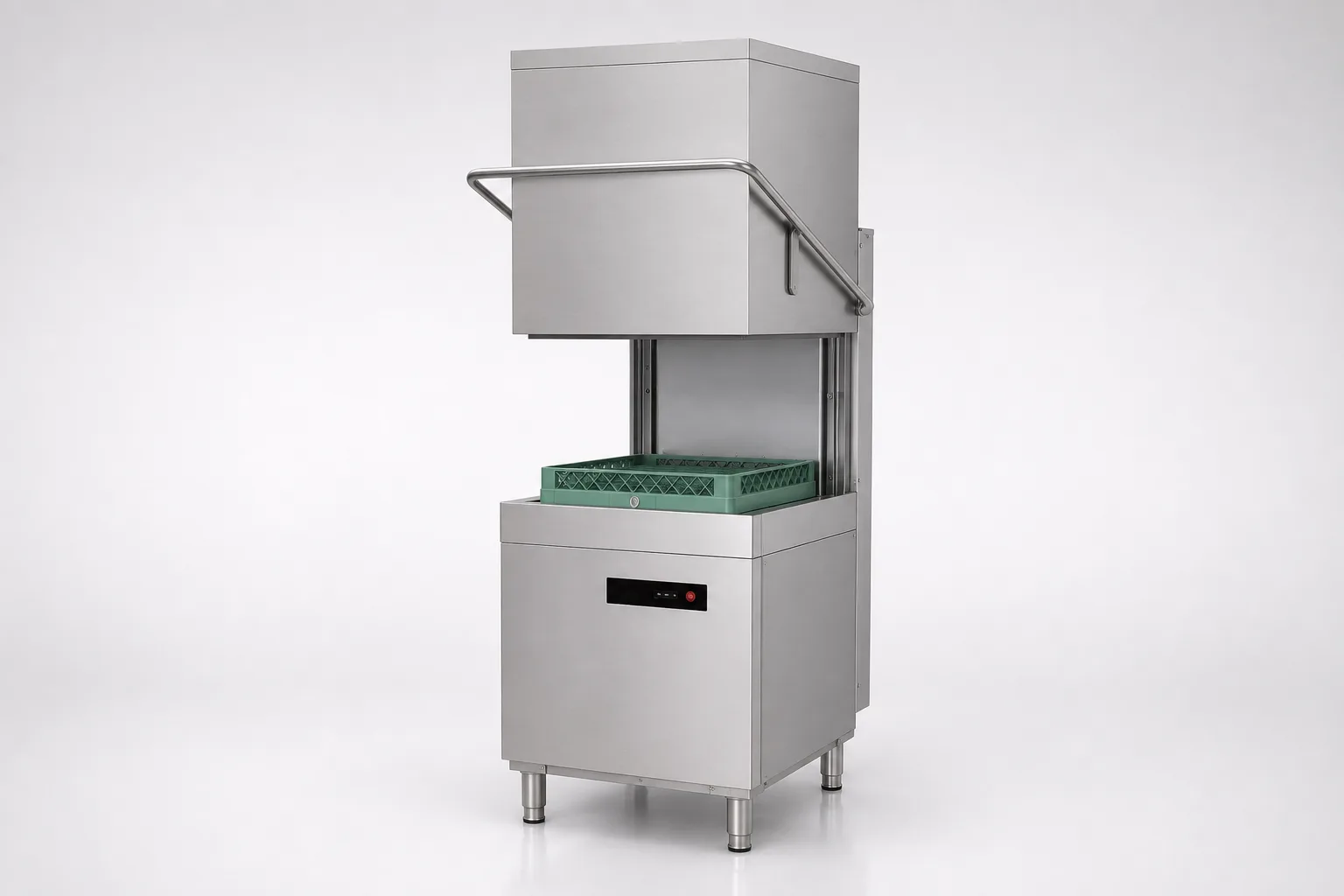
Washing Equipment
Hood-Type Dishwasher
A compact rack-based dishwasher for restaurants, hotels and institutional kitchens that need repeatable washing in a practical footprint.
View Details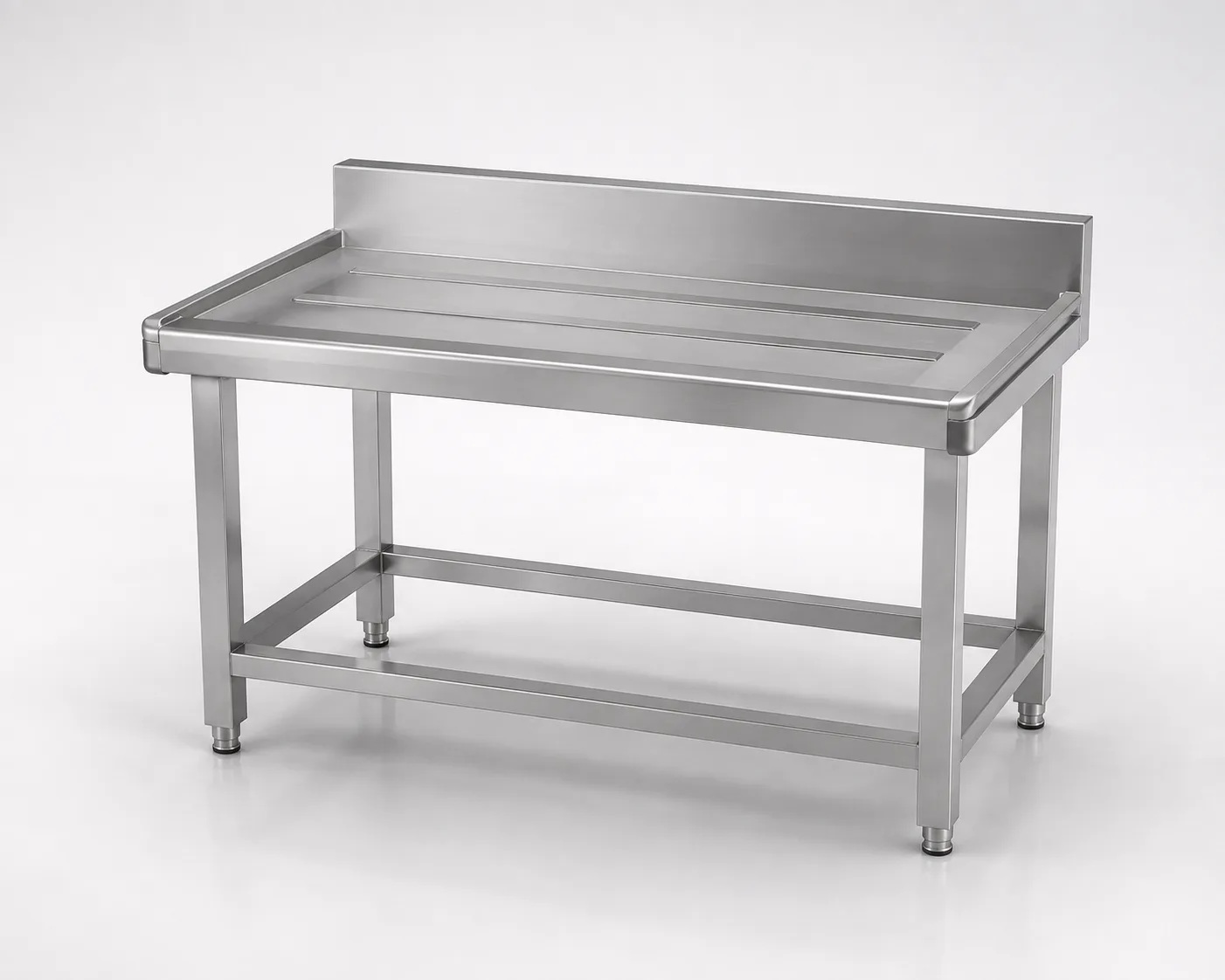
Washing Equipment
Clean Dish Outlet Table
Provides a compatible discharge area after a hood-type dishwasher for rack movement, draining, unloading and clean-dish sorting.
View DetailsRelated Solutions