

Chinese Wok, Large-Pot and Clay-Pot Cooking Stations
Commercial Gas Range & Wok Range
SourcePro commercial gas and wok ranges cover high-output Chinese cooking stations for stir-frying, hot-water access, stock production, clay-pot cooking and large-vessel applications. The family can include one- or two-wok ranges with an integrated warming-water pot, clay-pot stations and large-pot stoves, with natural-gas, LPG or induction configurations reviewed according to the site. Burner count, warming-water-pot arrangement, pan size, energy source, controls and dimensions are treated as selectable project configurations within one established product page, not as separate competing pages.
Overview
Product Overview
This family supports Chinese and Asian cooking processes where cookware diameter, burner arrangement, peak output, water access, exhaust and heat source define the equipment brief. Gas and induction choices should remain under one buyer-facing family when the cooking function and purchase intent are the same.
Key Features
Key Features
Single-wok/single-warming-pot and double-wok/single-warming-pot stations
Large-pot and stockpot stove arrangements
Three-, four-, six- and eight-head clay-pot references
Natural gas or LPG configurations with project-confirmed pressure and safety systems
Induction wok, soup, large-pot and clay-pot equivalents
Tabletop or floor-standing arrangements where supported by the selected configuration
Applications
Where This Product Is Used
Chinese restaurants
hotel Chinese kitchens
food courts
staff canteens
central kitchens
banquet kitchens
clay-pot and stock production stations.
Buyer Benefits
Why Buyers Choose This Type
Process-specific layouts — wok, warming-water pot, clay-pot and large-pot positions can be selected around the menu and chef workflow.
Configurable station size — one-wok, two-wok and multi-head arrangements can be reviewed without fragmenting the product family.
Gas or induction choices — natural gas, LPG and all-electric induction references can be compared for the project.
Operator-focused fabrication — splashbacks, water controls, pot supports and work heights are coordinated with the station design.
Safety options — ignition and flame-failure protection requirements are confirmed for gas configurations and destination rules.
Project utility review — gas pressure, electrical load, water, drainage and exhaust are checked before the final model is approved.
Technical Data
Specifications
Reference Configuration
Wok count, warming-water-pot arrangement, large-pot size, clay-pot head count, natural gas or LPG, induction equivalents, ignition, controls and dimensions must remain configurations on the existing canonical page.
Reference Specifications / Configurations
Planning ranges only. Final values are confirmed for the selected project configuration.
| Display Group | Metric | Public Reference Wording | Buyer Confirmation Required |
|---|---|---|---|
| Wok range | Main station envelope | Across cited series, one- and two-wok stations are approximately 1.0–1.8 m wide × 0.9 m deep × 0.8 m high. Selected Chinese wok-range configurations include an integrated warming-water pot with a dedicated filling faucet. These are cross-series references, not one adjustable chassis. | Wok count; warming-water-pot count and bowl size; filling faucet; work height; footprint; clearances |
| Burner | Standalone gas burner bodies | Approximately 0.52–0.55 m wide × 0.43–0.47 m deep × 0.64–0.70 m high, with cited basin diameters about 340–380 mm. | Cookware diameter; tabletop/floor use; gas type; support |
| Clay-pot | Head count and envelope | Three-, four-, six- and eight-head references span approximately 0.75–1.45 m wide × 0.46–0.81 m deep × 0.90 m high across different series. | Head count; pot diameter; burner output; spacing; gas type |
| Large-pot | Source size classes | Large-pot stove selection should be based on confirmed vessel opening, usable volume, cookware geometry and corrected millimetre drawings; source size-class conventions are not published. | Pan diameter/volume; batch weight; source class convention; dimensions |
| Gas | Fuel and safety | Natural-gas and LPG configurations are referenced, with electronic or pulse ignition and thermocouple flame-failure protection in selected series. | Gas type; pressure; nozzle; consumption; ignition; flame failure; local code |
| Induction | Electric equivalents | Induction references are approximately 5–30 kW per cited single- or double-wok assembly, with 220/380 V examples across different products. | Function; zone count; per-zone load; voltage/phase; demand |
| Utilities | Water, drain and exhaust | Connection positions, gas consumption and exhaust requirements are configuration- and market-specific and are incomplete in the source set. | Water; drain; exhaust hood; make-up air; gas/electrical schedule |
The information shown is a reference configuration range for project planning. Final model, dimensions, capacity, power, voltage, gas type, utilities and options are confirmed after enquiry review and approved drawings.
Project Confirmation
Project Confirmation Checklist
Cooking processes and peak output — Menu/process + peak batches
Wok, clay-pot or large-pot dimensions — Diameter / volume / weight
Wok, warming-water-pot and clay-pot head count — Count by function
Natural gas or LPG — Fuel type
Gas pressure, nozzle and consumption — Pressure / nozzle / m³/h or kg/h
Ignition and flame-failure requirements — Required system + destination code
Per-zone load and electrical supply — kW / V / Hz / phase
Overall size and work height — L × W × H
Water controls and drainage — Size + position
Hood, exhaust and make-up air — Hood plan / airflow
Material, splashback and pot support — Finish and support brief
Destination gas/electrical requirements — Country/region + certificates
Commercial Gas Range & Wok Range FAQ
Which products are included in the Gas Range & Wok Range family?
The family can include one- or two-wok ranges with an integrated warming-water pot, standalone wok burners, clay-pot ranges, large-pot stoves and induction equivalents where the cooking function and buyer intent remain aligned.
How should I choose between gas and induction configurations?
Start with the wok, clay-pot or large-pot cooking task and the available site utilities. Confirm the selected gas type or induction configuration and its installation requirements before ordering.
How do I choose the number of wok or clay-pot positions?
Use the menu, peak order mix, cookware diameter, production target, chef workflow, available width and exhaust capacity. Head count should be confirmed together with burner or induction output.
Can natural gas and LPG both be specified?
Both are referenced, but gas type, pressure, nozzle, consumption, ignition, flame-failure protection and destination certification must be confirmed for the selected configuration.
What does the large-pot size class mean?
Confirm actual vessel opening, usable volume, cookware geometry and batch requirement from corrected drawings rather than relying on an unverified source size class.
What safety information is needed for a gas range?
Confirm gas type and pressure, ignition, flame-failure protection, shut-off arrangement, ventilation, clearances and the certifications required in the destination market.
What information is required for configuration?
Provide the cooking process, peak output, wok or pot diameter, burner or head count, preferred energy source, footprint, water and drainage needs, exhaust arrangement and local compliance requirements.
Product Inquiry
Configure the range around your menu and utilities
Share the cooking processes, wok and pot diameters, burner or head count, peak output, preferred energy source and available gas, electrical, water, drainage and exhaust services. SourcePro will prepare a configuration checklist for enquiry and drawing review.
Request Cooking Equipment SelectionRelated Products
Related Commercial Cooking Equipment
Commercial Cooking Equipment
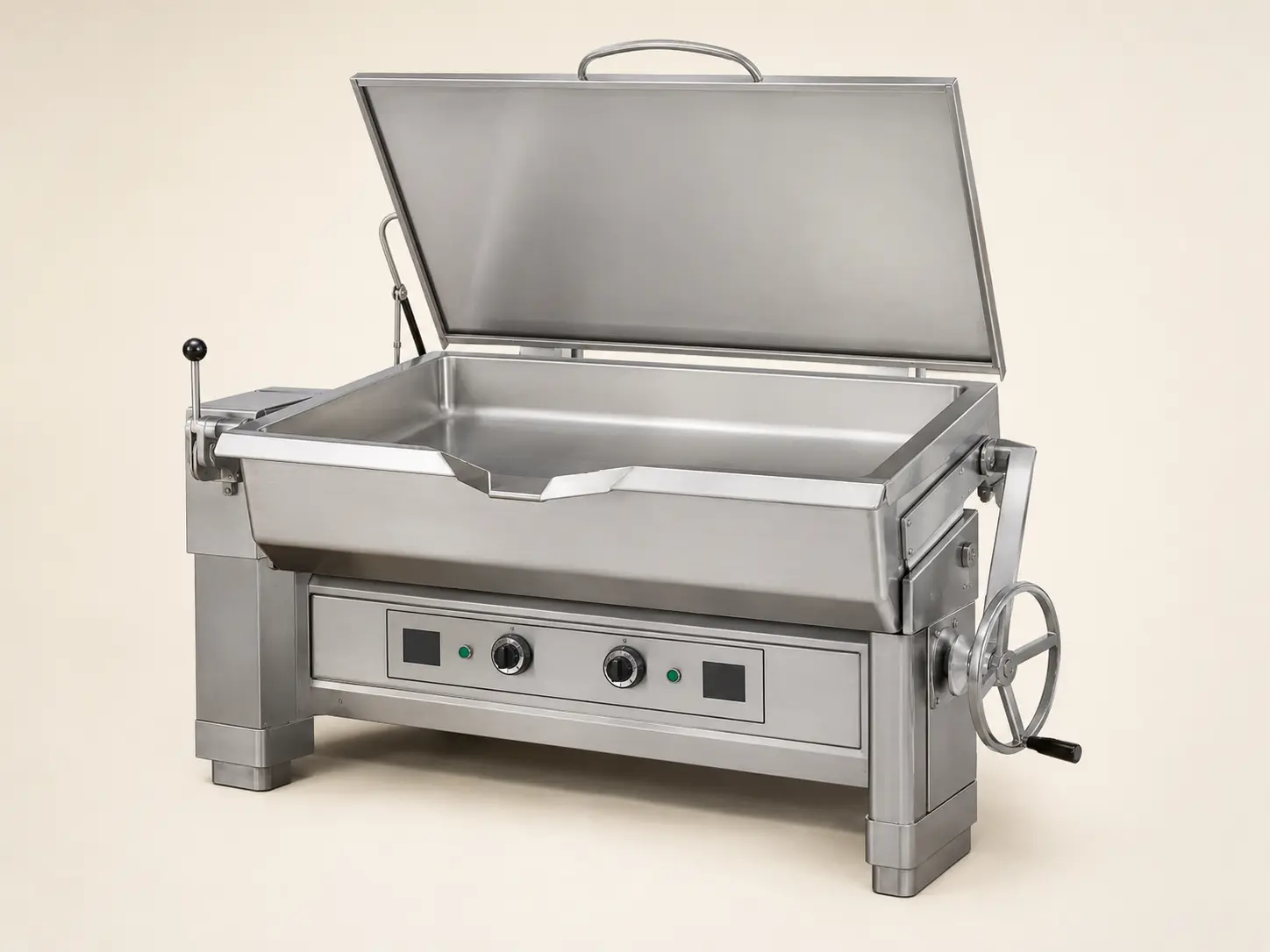
Commercial Tilting Braising Pan
Configure a commercial tilting braising pan by product, batch, pan geometry, energy, temperature control, tilt, discharge and utilities.
View Details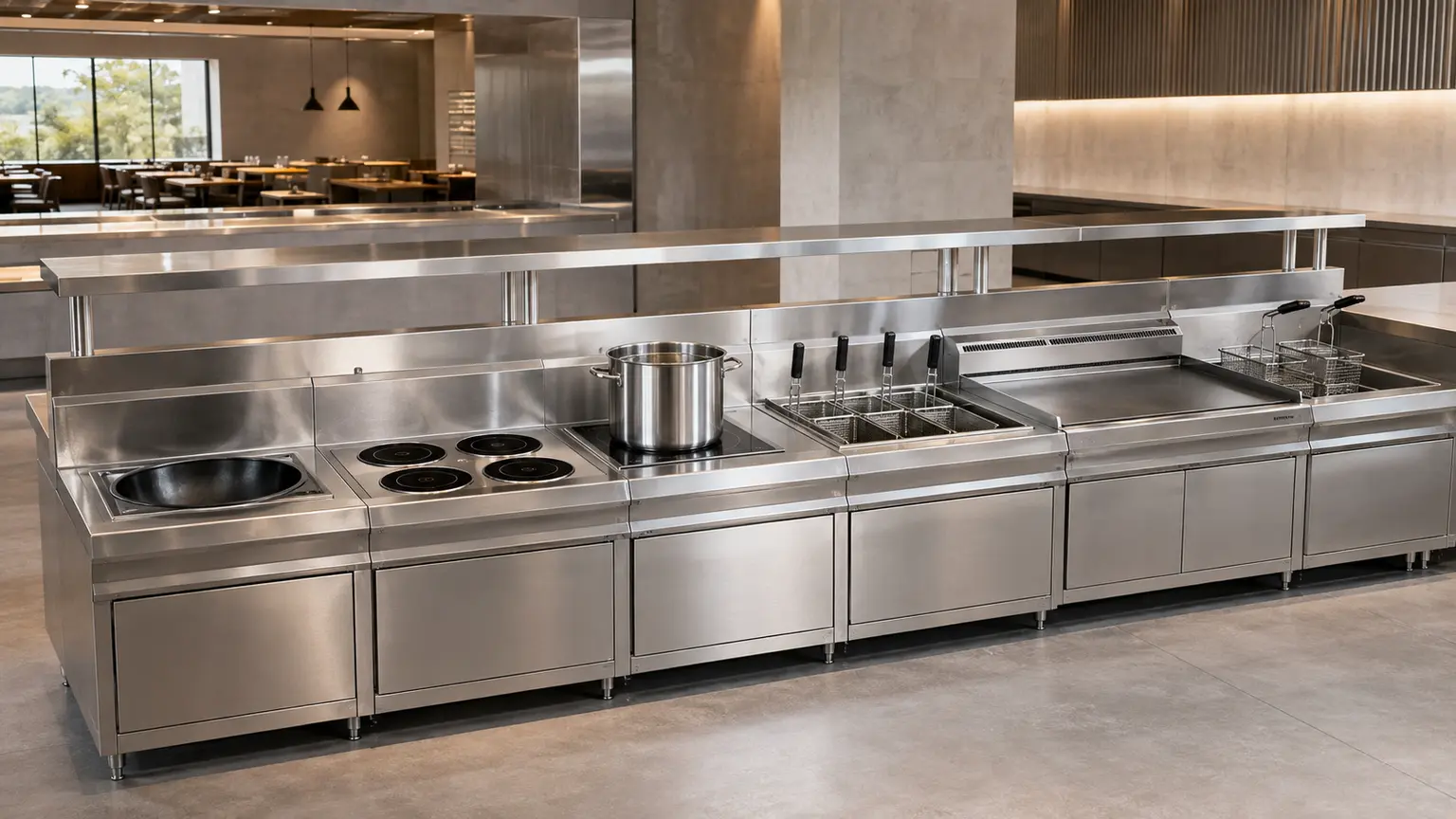
Commercial Cooking Equipment
Commercial Modular Induction Cooking Suite
Design a custom all-electric induction cooking suite with wok, clay-pot, stockpot, noodle, griddle and fryer modules for an open kitchen.
View Details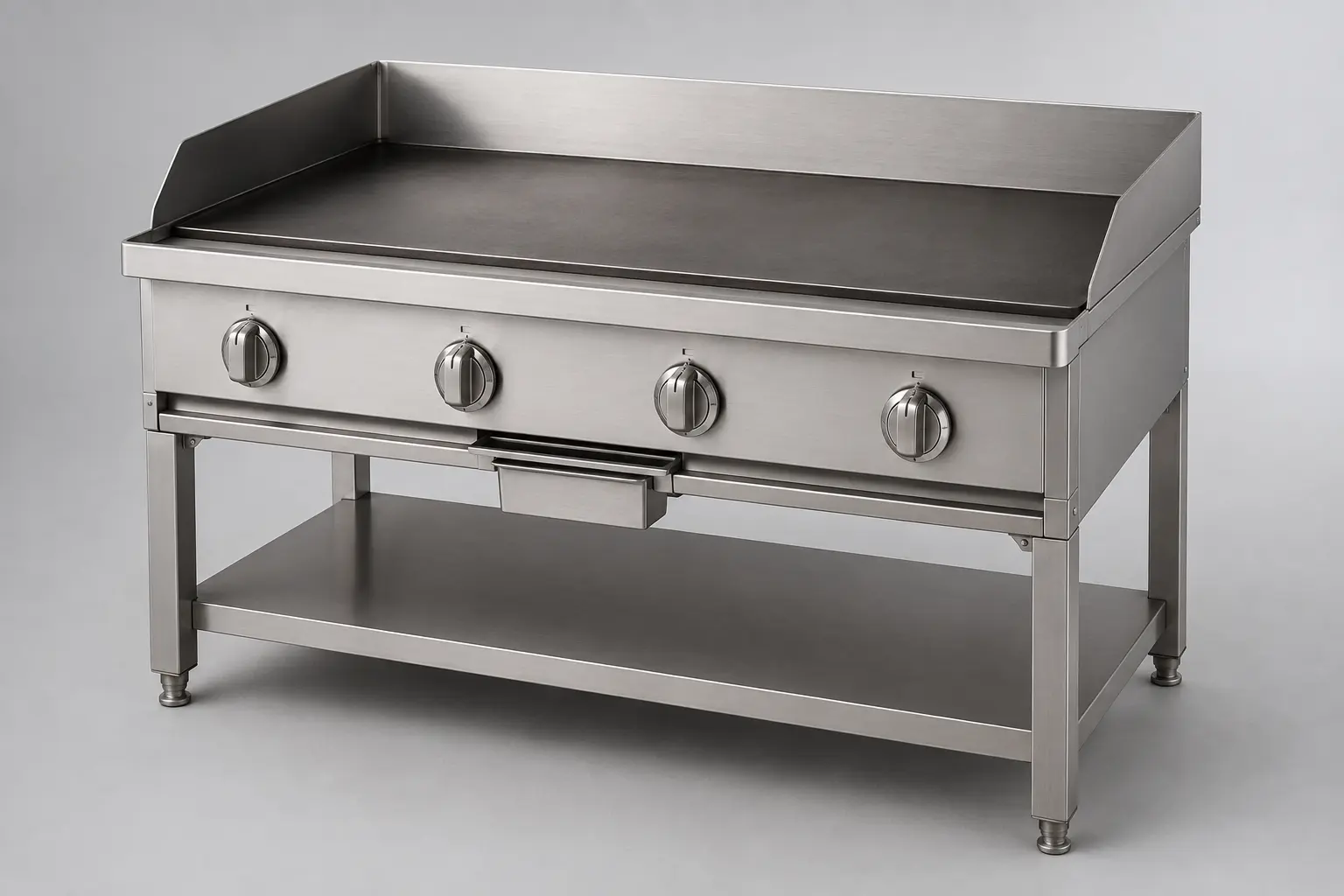
Commercial Cooking Equipment
Commercial Griddle & Charbroiler
Configure a commercial griddle or charbroiler by cooking surface, energy, zone layout, dimensions and destination utility requirements.
View Details