

Product Detail
Commercial Salamander Grill
Configure a commercial salamander grill around the finishing task, cooking area, energy source, adjustment system, controls and installation envelope.
Overview
Product Overview
Salamander grills apply concentrated overhead heat for gratinating, browning, glazing and short-cycle finishing at the pass. Their heat direction and service workflow make them distinct from griddles, charbroilers and full-size ovens. Electric and gas, lift-top and adjustable-rack, countertop and wall-shelf arrangements remain configurations under one family. Final dimensions, energy, gas type, electrical supply, clearances, mounting and destination compliance are confirmed after the menu and site are reviewed.
Key Features
Key Features
High-intensity overhead heat for finishing and browning
Liftable heating head or multi-position rack adjustment by selected series
Electric or gas configurations subject to the approved supplier matrix
One or multiple heat zones where supported
Removable rack and drip tray for routine cleaning
Countertop or wall-shelf installation after clearance review
Timer, plate-detection or energy-control options on selected configurations
Applications
Where This Product Is Used
Gratinating and cheese finishing
Browning and glazing plated dishes
Toasting and short-cycle pass-line finishing
Restaurants, hotels and central kitchens
Menus validated for the selected heat system and cooking area
Buyer Benefits
Why Buyers Choose This Type
Electric or gas heating
Fixed body with adjustable rack or liftable top
Countertop or wall-shelf mounting
Single or multiple heat zones
Alternative cooking widths and GN-compatible supports
Manual controls, timer or energy-saving functions
Destination-specific voltage, phase, frequency and gas type
Technical Data
Specifications
Reference Configuration
Separate official examples span roughly 460–890 mm W × 302–562 mm D × 322–544 mm H. Electric examples are about 1.7–5.4 kW at 230–400 V; gas examples about 5.0–6.8 kW; cooking-area examples about 415–580 × 230–340 mm. These are source-tied examples, not one guaranteed SourcePro range.
Configuration Options
Electric or gas heating; Fixed body with adjustable rack or liftable top; Countertop or wall-shelf mounting; Single or multiple heat zones; Alternative cooking widths and GN-compatible supports; Manual controls, timer or energy-saving functions; Destination-specific voltage, phase, frequency and gas type
Reference Specifications
Separate official examples span roughly 460–890 mm W × 302–562 mm D × 322–544 mm H. Electric examples are about 1.7–5.4 kW at 230–400 V; gas examples about 5.0–6.8 kW; cooking-area examples about 415–580 × 230–340 mm. These are source-tied examples, not one guaranteed SourcePro range.
| Reference configuration | Qualified reference example |
|---|---|
| Electric lift-top reference | 600 × 562 × 544 mm; 4.5 kW; 230–400 V; cooking area 525 × 265 mm; GN 1/1 support on the cited model. |
| Electric adjustable reference | 600 × 472 × 500 mm; 4.5 kW; 230 V; cooking area 532 × 340 mm on the cited model. |
| Gas references | Separate official examples list about 5.0–6.8 kW and multiple rack positions across different 600/750 mm classes. |
Reference configurations are not fixed SourcePro promises. Final model, capacity, dimensions, power, utilities, safety, load basis and compliance are confirmed after inquiry and technical review.
Project Confirmation
Project Confirmation Checklist
Menu items and finishing task
Electric or gas energy preference and gas type
Cooking width, cooking area and GN compatibility
Liftable head or rack-position preference
Heat-zone and timer/control requirement
Countertop or wall-shelf mounting and service height
Voltage, phase, frequency, ventilation, clearances and destination compliance
Commercial Salamander Grill FAQ
What is a commercial salamander grill used for?
It provides intense overhead heat for browning, gratinating, glazing, toasting and other short finishing tasks. It is not a substitute for a full oven or a contact griddle.
Should I choose an electric or gas salamander?
The choice depends on the available utilities, heat response, gas type, ventilation, controls and local compliance. SourcePro confirms the selected configuration after the site and menu are reviewed.
What is the difference between a lift-top and adjustable-rack salamander?
A lift-top unit changes the distance between the heat source and food by moving the heating head, while a fixed body usually uses multiple rack positions. Availability and working height vary by supplier series.
Can a salamander grill be wall mounted?
Some systems support a wall shelf or mounting accessory, but wall structure, service height, heat clearance, ventilation and maintenance access must be confirmed before release.
Are the listed dimensions and power fixed?
No. They are qualified examples from separate official products. Final size, energy, voltage, gas type and controls are confirmed for the quoted configuration.
Product Inquiry
Configure Your Salamander Grill
Share the menu, finishing duty, energy preference, cooking area, adjustment system, mounting location and utilities. SourcePro will align a qualified reference configuration for quotation and technical confirmation.
Configure Your Salamander GrillRelated Products
Related Commercial Cooking Equipment
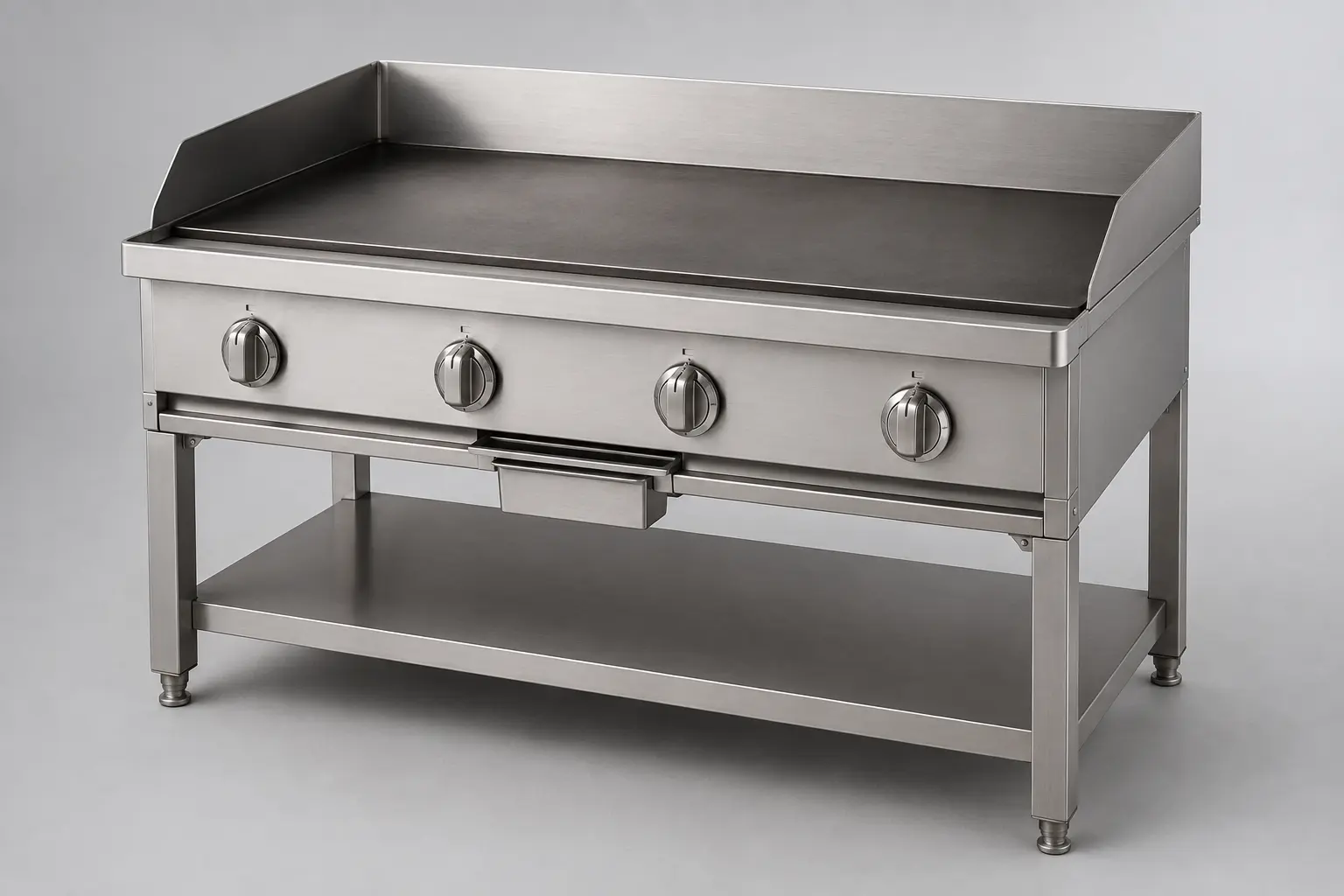
Commercial Cooking Equipment
Commercial Griddle & Charbroiler
Configure a commercial griddle or charbroiler by cooking surface, energy, zone layout, dimensions and destination utility requirements.
View Details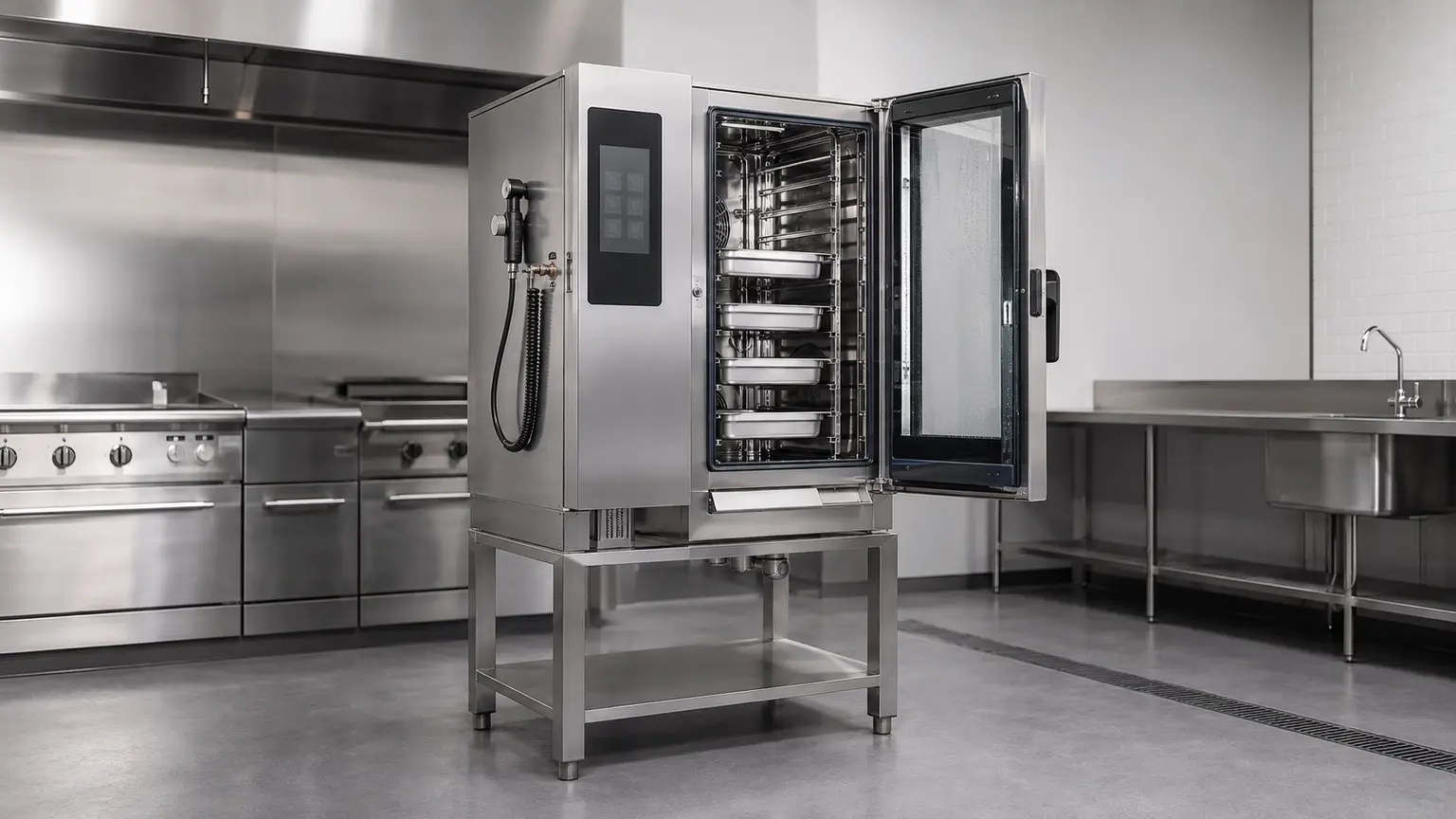
Commercial Cooking Equipment
Commercial Combi Oven
Compare commercial combi ovens by GN capacity, steam and hot-air modes, electric or gas utilities, controls, cleaning and project requirements.
View Details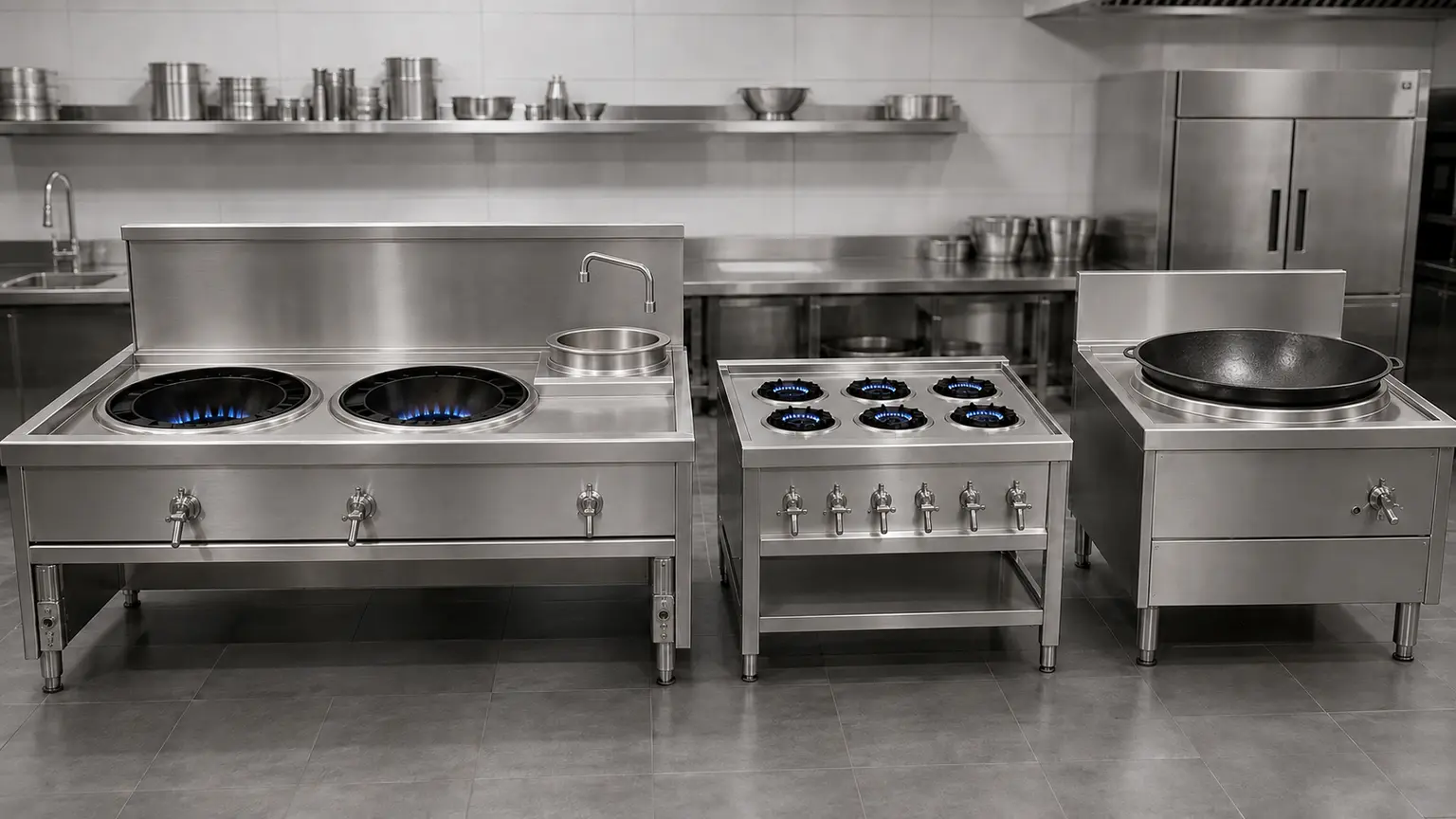
Commercial Cooking Equipment
Commercial Gas Range & Wok Range
Configure commercial Chinese wok, clay-pot and large-pot ranges by burner count, warming-water-pot arrangement, gas or induction heat, cookware size, utilities and workflow.
View Details