

Product Detail
Commercial Sheet Pan Rack Trolley
Configure a sheet pan rack trolley around the exact pan or tray standard, holding count, rail spacing, loading direction, temperature duty, cover and casters.
Overview
Product Overview
Sheet pan rack trolleys organize, stage and move bakery trays or food pans between preparation, proofing, baking, cooling and storage areas. Tray count is meaningful only when paired with the exact tray dimensions and rail spacing. Full- and half-height, side- and end-load, 600 × 400 mm and 18 × 26 inch formats remain configurations. Final rail load, unit load, hot-pan temperature, pan stops, cover, caster material and stability are confirmed for the selected system.
Key Features
Key Features
Dedicated rails for a confirmed pan or tray standard
Full- or half-height trolley formats
Side-load or end-load construction
Alternative rail spacings for different product heights
Pan stops and optional protective covers
Swivel casters with brake configurations
Construction-specific rail, unit and temperature-duty ratings
Applications
Where This Product Is Used
Bakery tray staging and transport
Proofing, baking and cooling workflows
Commissary pan movement
Rack organization for 600 × 400 mm or 18 × 26 inch systems
Hot or ambient duty after caster and rail confirmation
Buyer Benefits
Why Buyers Choose This Type
600 × 400 mm or 18 × 26 inch pan standard
Full- or half-height trolley
Side-load or end-load orientation
Alternative rail counts and spacing
Open frame or protective cover
Pan stops and optional nesting features
Caster material, diameter and brake arrangement
Technical Data
Specifications
Reference Configuration
Official 600 × 400 mm examples hold 18 pans full-height or 9 pans half-height at about 698 × 516 × 1708/1014 mm. Separate 18 × 26 inch systems use 38 or 76 mm rail spacing and selected capacities around 20 or 40 pans. Counts, dimensions, spacing and loads remain linked to each construction.
Configuration Options
600 × 400 mm or 18 × 26 inch pan standard; Full- or half-height trolley; Side-load or end-load orientation; Alternative rail counts and spacing; Open frame or protective cover; Pan stops and optional nesting features; Caster material, diameter and brake arrangement
Reference Specifications
Official 600 × 400 mm examples hold 18 pans full-height or 9 pans half-height at about 698 × 516 × 1708/1014 mm. Separate 18 × 26 inch systems use 38 or 76 mm rail spacing and selected capacities around 20 or 40 pans. Counts, dimensions, spacing and loads remain linked to each construction.
| Reference configuration | Qualified reference example |
|---|---|
| 600 × 400 mm trolley references | Full height: 18 pans, about 698 D × 516 W × 1708 H mm; half height: 9 pans, about 698 D × 516 W × 1014 H mm. |
| 18 × 26 inch rack references | Selected systems use 1.5 or 3 in rail spacing and about 20 or 40 full-size pans depending rail spacing and model. |
| Temperature/caster architecture | Selected composite rails are rated up to 350°F (177°C); plastic or metal casters and dual-lock brake arrangements are offered on cited systems. |
Reference configurations are not fixed SourcePro promises. Final model, capacity, dimensions, power, utilities, safety, load basis and compliance are confirmed after inquiry and technical review.
Project Confirmation
What We Confirm for Your Project
Exact tray or pan dimensions and rim geometry
Required count and rail spacing
Full- or half-height and side- or end-load orientation
Ambient, proofing, cooling or hot-pan temperature duty
Rail load, total unit load and pan-stop requirement
Cover, nesting, caster type, wheel diameter and brakes
Door, lift and aisle clearances, floor condition and stability requirement
Commercial Sheet Pan Rack Trolley FAQ
Why must tray count be paired with tray size?
A count such as 18 or 20 is ambiguous without the exact tray dimensions and rail spacing. Different 600 × 400 mm and 18 × 26 inch systems are not interchangeable.
What is the difference between side-load and end-load racks?
The tray enters along its long or short edge, changing rack width, aisle access and compatibility with ovens, proofers and covers.
Can the trolley hold hot pans?
Only when the selected rails, frame, casters, brakes and cover are rated for the required temperature. Hot-duty limits must be confirmed from the supplier data.
Should I choose a full- or half-height trolley?
Full-height racks maximize capacity, while half-height racks can improve reach and maneuverability. Door, lift, aisle, center-of-gravity and loading requirements should be reviewed.
Are covers and pan stops available?
They are common options on selected systems. Cover material, ventilation, pan-stop design and cleaning method must match the product and workflow.
Product Inquiry
Configure Your Sheet Pan Rack
Share the exact pan size, tray count, spacing, loading direction, temperature duty, cover, route clearances and caster requirements. SourcePro will align a suitable rack-trolley configuration.
Configure Your Sheet Pan RackRelated Products
Related Storage Equipment
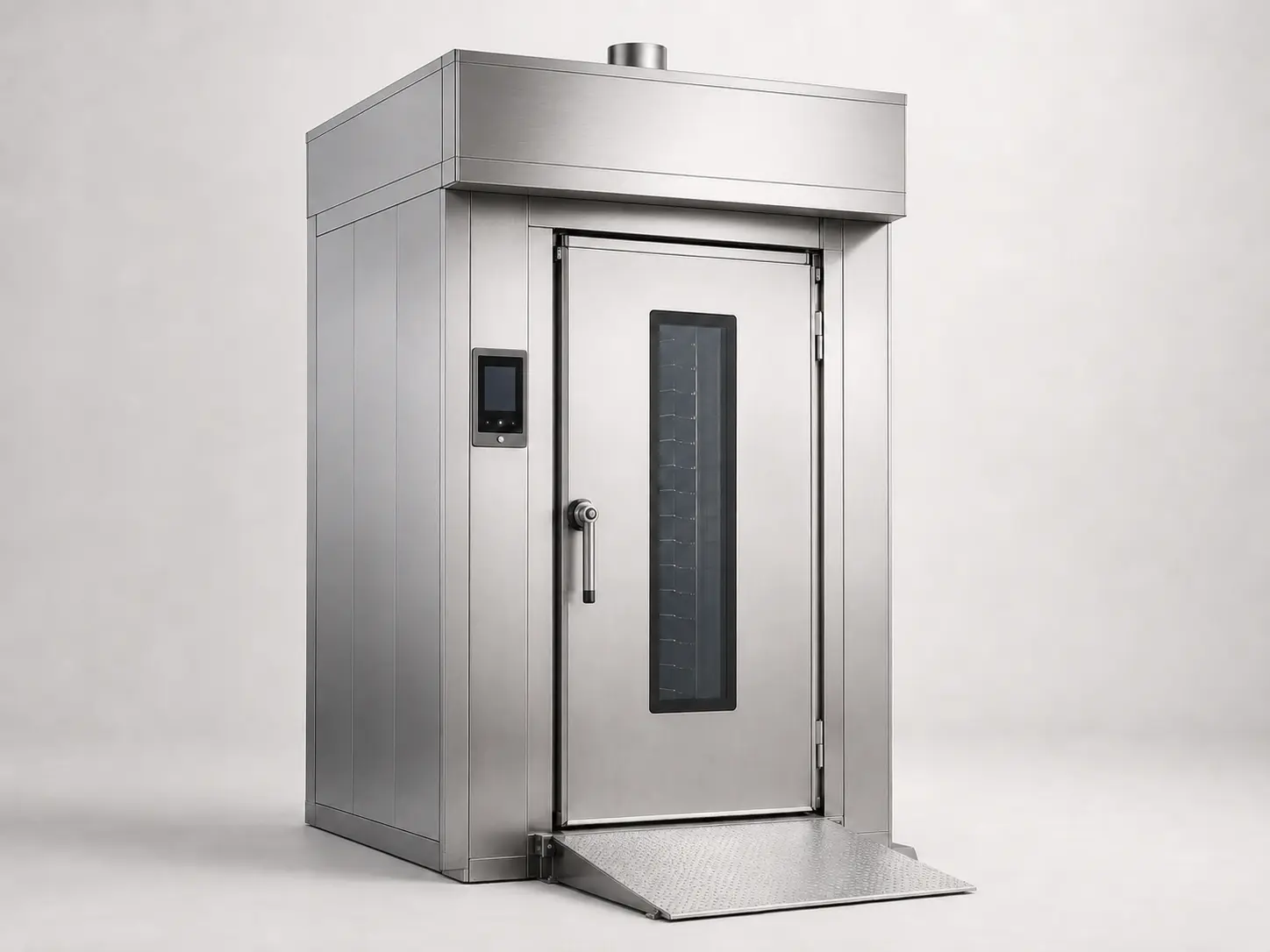
Bakery Equipment
Commercial Rotary Rack Oven
Configure a commercial rotary rack oven by rack and tray standard, production load, single or double rack, gas or electric heat, steam, hood and site envelope.
View Details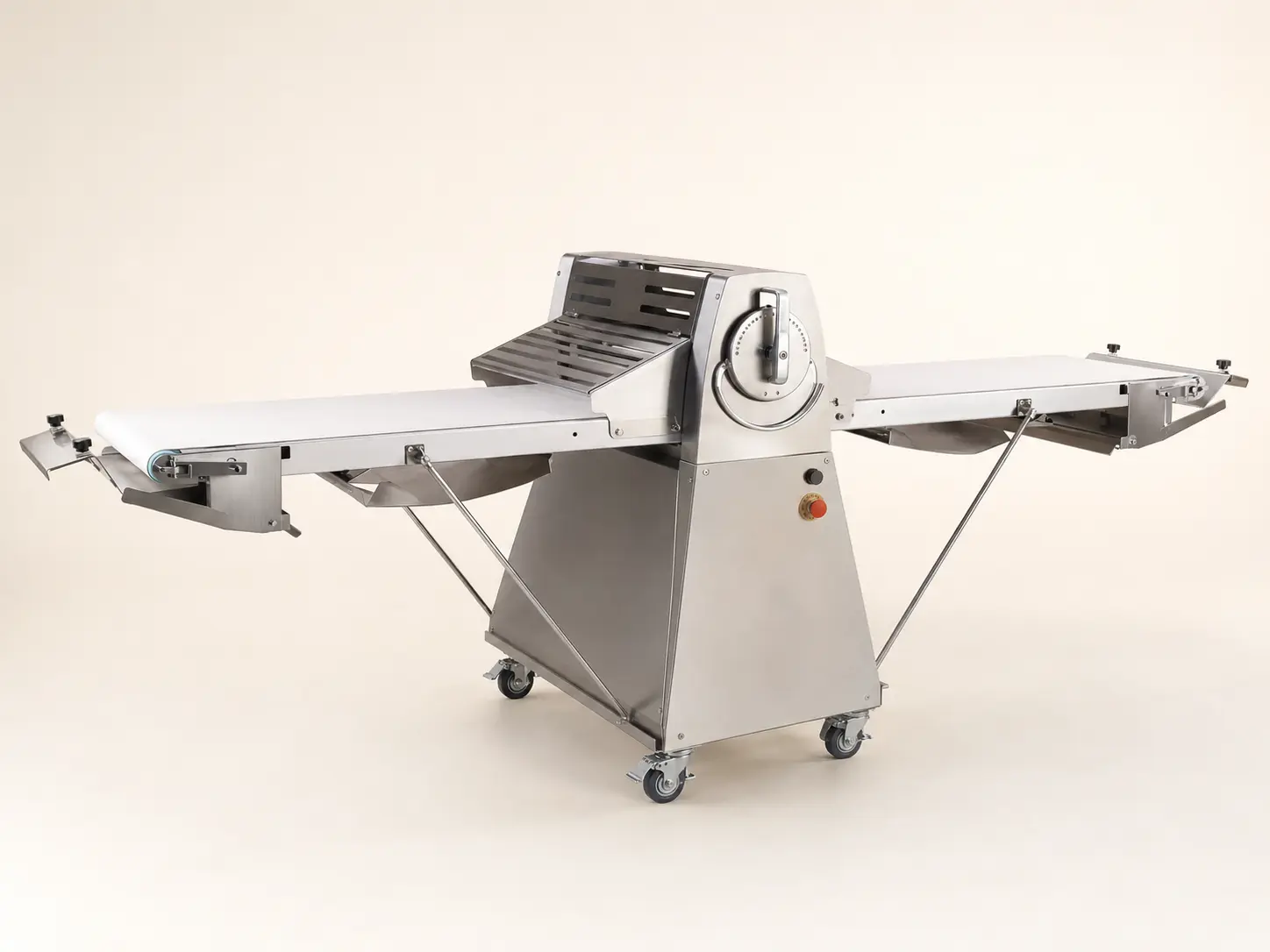
Bakery Equipment
Commercial Dough Sheeter
Configure a commercial dough sheeter by pastry type, sheet width and thickness, dough block, reversible workflow, table length, safety and power.
View Details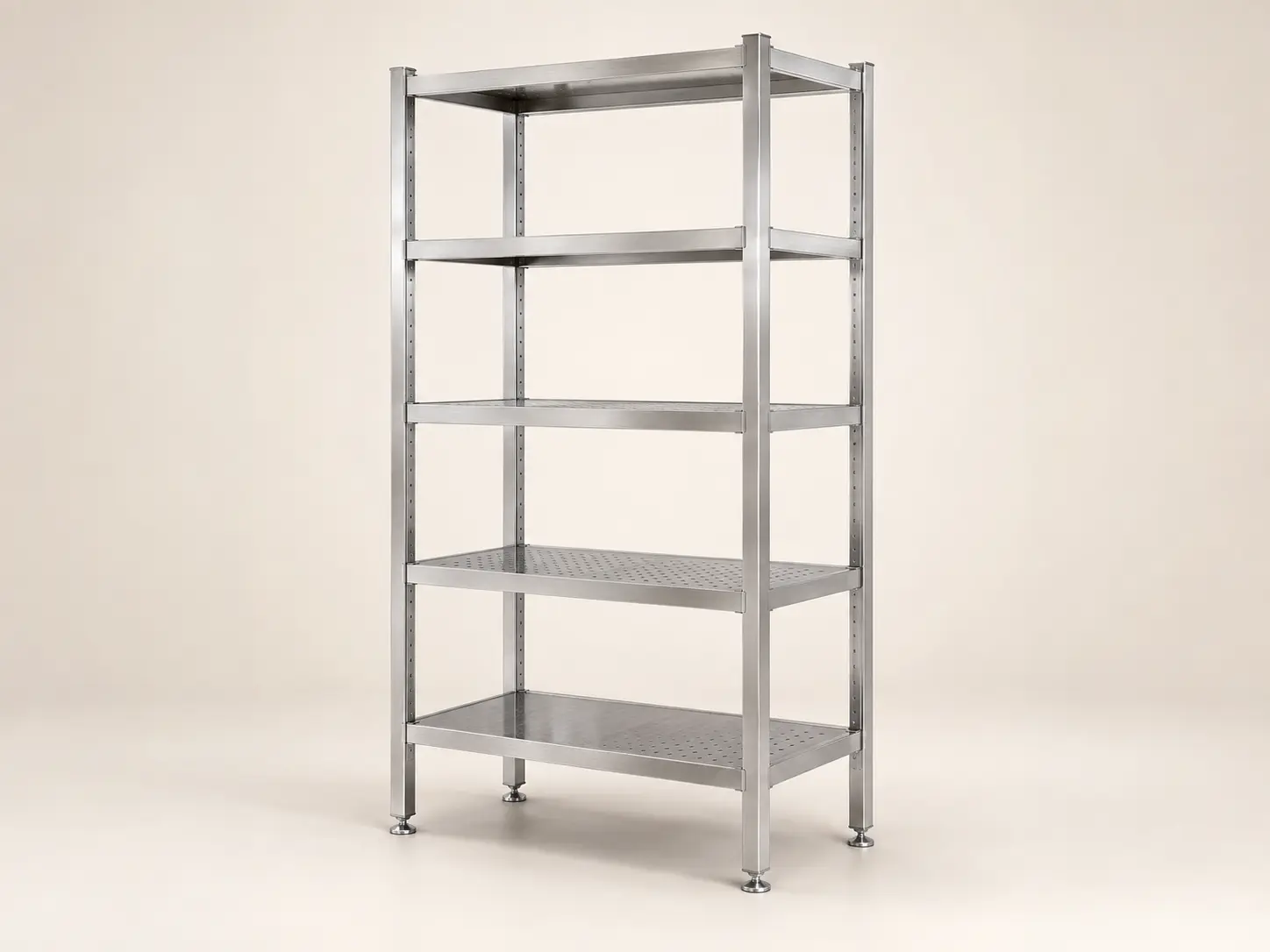
Storage Equipment
Commercial Floor-Standing Shelving Unit
Configure commercial floor-standing shelving by environment, dimensions, tier count, shelf construction, material, load, mobility and restraint.
View Details