

PROJECT-CONFIGURED STEAM & CONDENSATE CAPTURE
Commercial Condensate Hood
SourcePro coordinates commercial condensate hood configurations around the steam source, equipment opening cycle, canopy geometry, baffle arrangement, condensate collection, drainage, exhaust airflow and cleaning access. Dishwasher and heavy-steam formats can be reviewed with optional low-velocity make-up air.
Overview
Product Overview
A condensate hood manages moisture rather than assuming a grease-producing cooking process. Steam release pattern, machine doors, pot or kettle operation, canopy coverage, internal deflectors, condensate gutters, drain routing and corrosion environment affect the correct configuration. The system should also allow safe cleaning and access without dripping back onto equipment or operators.
Key Features
Key Features
Dishwasher and heavy-steam canopy formats
Angled baffles or deflectors for condensate separation
Internal liner, gutter and drain-tap configurations
Optional balancing points and low-velocity supply air
Welded stainless construction and removable access
Sectional formats for large steam-producing equipment
Applications
Where This Product Is Used
Pass-through and hood-type dishwashers
Conveyor and rack dishwashing systems
Steam kettles, steamers and boiling equipment
Pot-wash and high-moisture production areas
Institutional and central kitchens
Buyer Benefits
Why Buyers Choose This Type
Controls steam and moisture at the equipment source
Provides a planned condensate collection and drain path
Reduces uncontrolled dripping around operators and equipment
Configuration review accounts for cleaning, corrosion and service access
Technical Data
Specifications
Reference Configuration
Pass-through dishwasher steam hood; conveyor-dishwasher condensate hood; heavy-steam canopy for kettles or steamers; modular hood; optional integrated low-velocity supply.
Reference Specifications / Configurations
Planning ranges only. Final values are confirmed for the selected project configuration.
| Configuration | Installation / Service | Length / Width mm | Depth mm | Height mm | Airflow / Capacity | Motor / Electrical Input | Voltage / Frequency | Static Pressure / Controls | Filtration / Drain | Material Reference | Confidence | Public Status |
|---|---|---|---|---|---|---|---|---|---|---|---|---|
| Dishwasher steam / condensate hood | Pass-through or hood-type dishwasher | 1000–2400 | 900–1400 | 400–650 | Calculated from steam and opening cycle | Optional lights/fan interlock | Destination supply confirmed | Low-pressure steam capture | Angled baffles; channel and drain tap | Commonly AISI 304 stainless; gauge confirmed | Medium | Reference only |
| Heavy-steam condensate hood | Kettles, steamers, conveyor dishwashing | 1500–3100 per section | 1100–1800 | 500–700 | Project-calculated; modular where needed | Optional supply air/lights/controls | Project-specific | Extract and optional supply balanced together | Multi-stage baffles; gutter and drain | Approx. 1.2 mm/18-gauge official reference; confirm | Medium | Reference only |
A condensate hood is not automatically a grease hood. Final application, airflow, baffle design, drainage, materials, mounting, supply-air options and compliance must be confirmed against the actual equipment and local requirements.
Project Confirmation
Project Confirmation Checklist
Equipment type and opening cycle
Steam output
Hood position and dimensions
Exhaust requirement
Condensate drain route
Water quality/corrosion
Cleaning access
Optional supply air
Destination rules and quantity
Commercial Condensate Hood FAQ
Is a condensate hood the same as a grease hood?
No. A condensate hood is primarily for steam and moisture capture. If grease-producing equipment is involved, the hood and filtration must be separately reviewed for that duty.
Does a condensate hood require drainage?
A condensate channel and drain connection are common. Final drain size, route, trap and wastewater arrangement depend on the hood and site.
Can it be used above a pass-through dishwasher?
Yes. Dishwasher steam hoods are within the sourcing scope, but the machine opening cycle, steam release, canopy position and exhaust requirement must be confirmed.
Product Inquiry
Request Ventilation System Selection
Share the appliance schedule, kitchen layout, available hood space, duct route, make-up air plan, electrical supply, treatment objective, quantity and destination country. SourcePro will review the requirements and coordinate the next ventilation-system selection steps.
Request Ventilation System SelectionRelated Products
Related Ventilation Equipment
Commercial Kitchen Ventilation Equipment
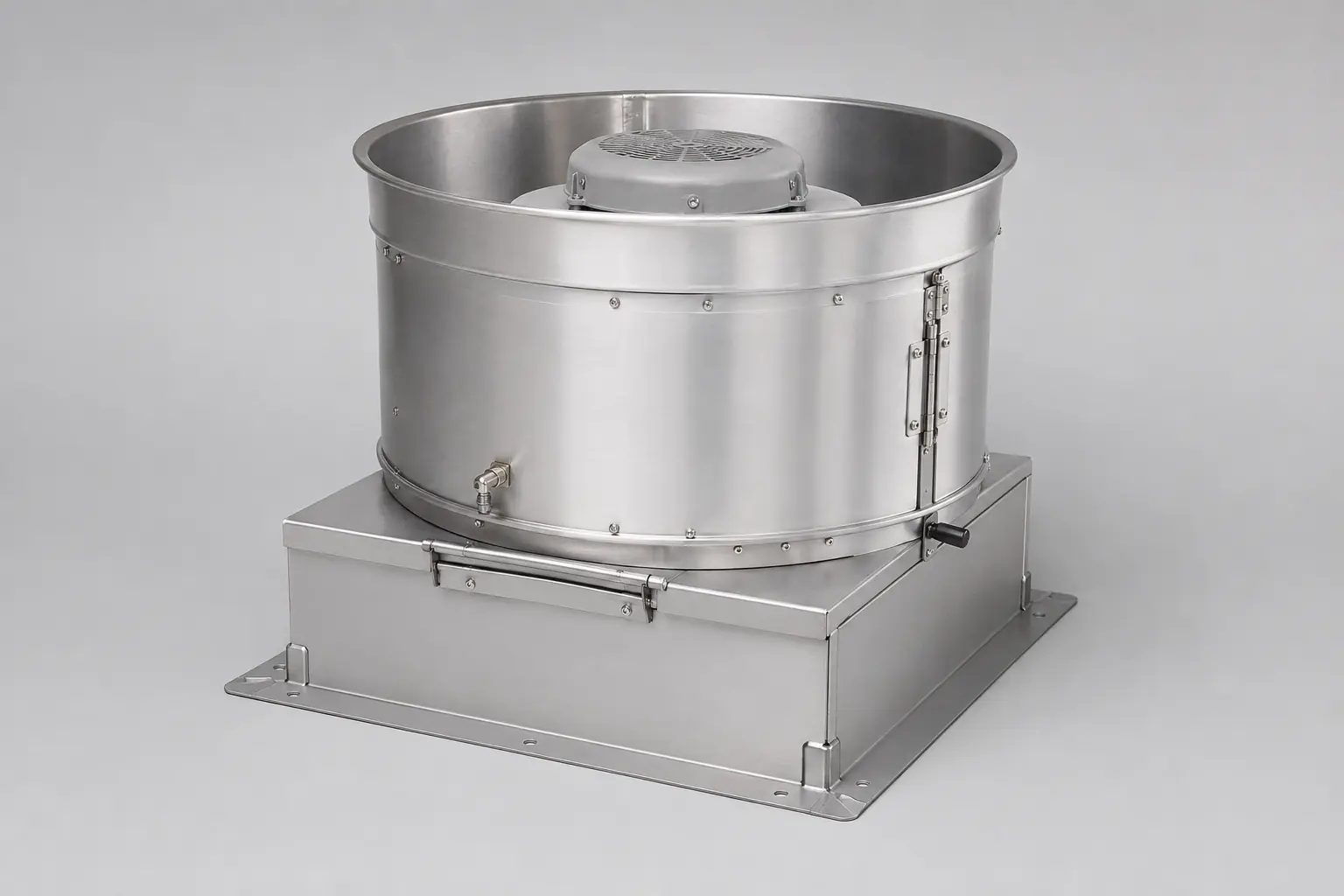
Commercial Kitchen Exhaust Fan
Centrifugal exhaust fan configurations selected by airflow, static pressure, grease duty and installation location.
View Details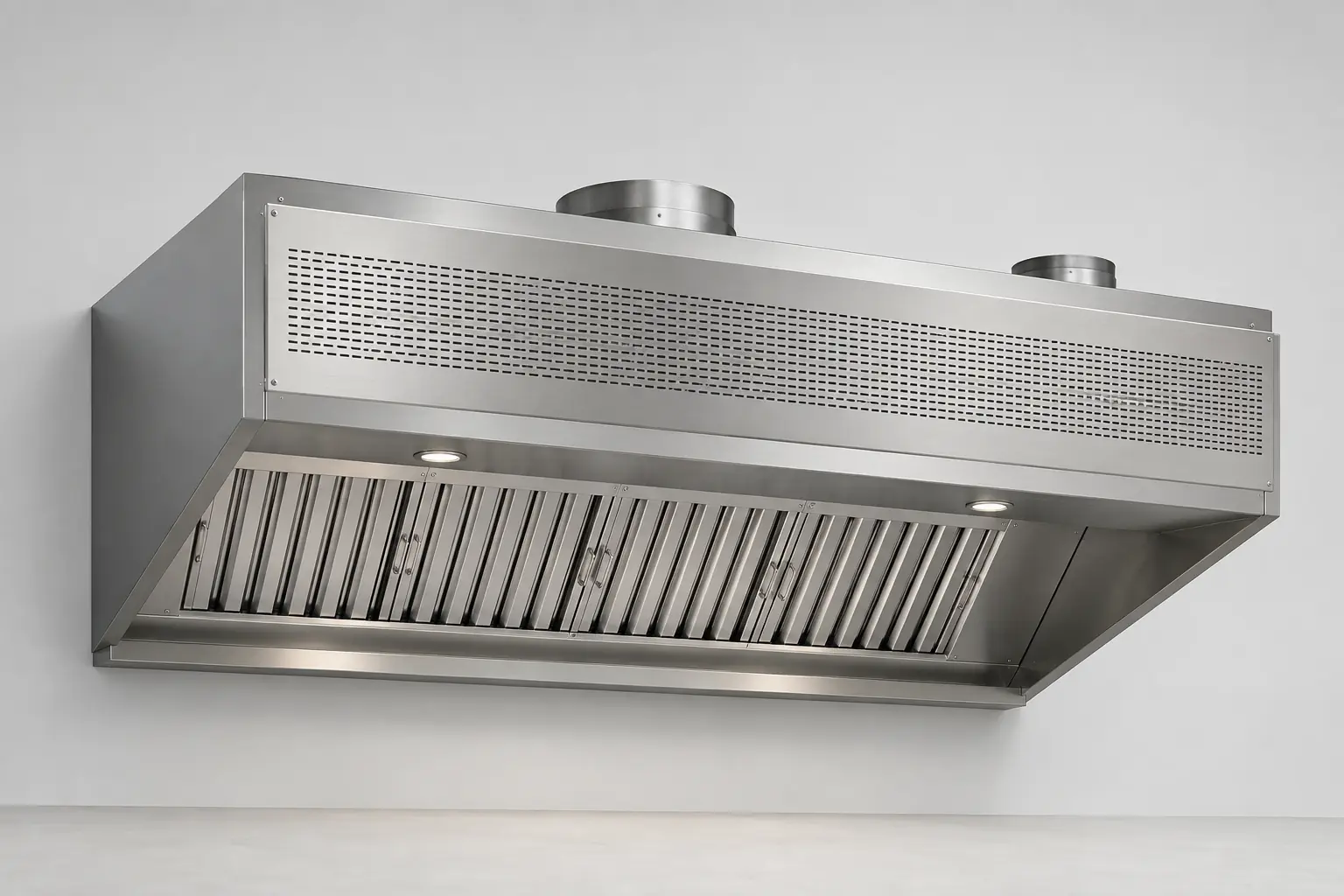
Commercial Kitchen Ventilation Equipment
Commercial Compensating-Air Exhaust Hood
Commercial kitchen exhaust hoods coordinated with low-velocity make-up air for capture and room-pressure control.
View Details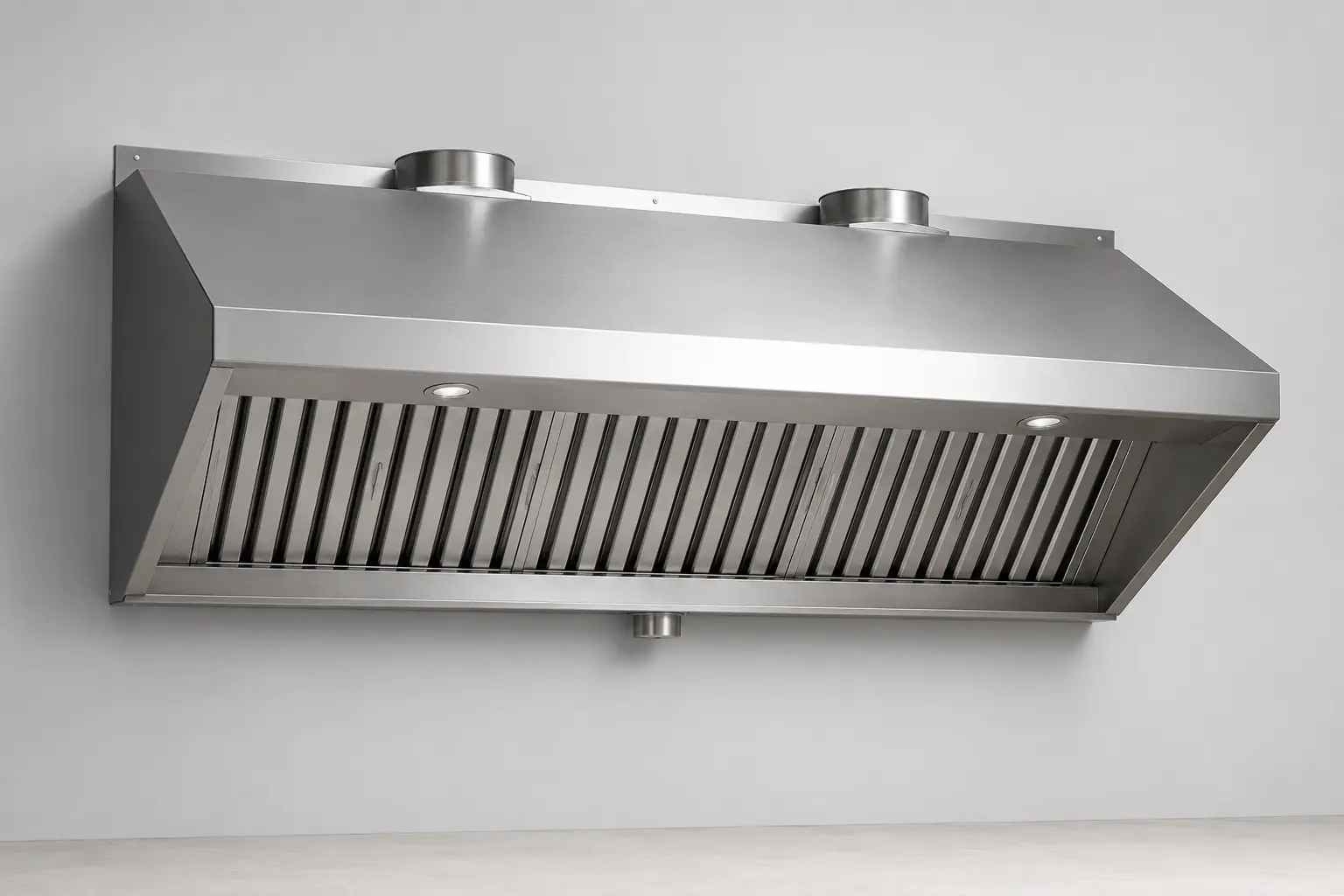
Commercial Kitchen Ventilation Equipment
Commercial Wall-Mounted Exhaust Hood
Wall-canopy exhaust hood configurations for commercial cooking lines installed against a wall.
View Details