

PROJECT-SELECTED KITCHEN EXHAUST FAN
Commercial Kitchen Exhaust Fan
SourcePro coordinates commercial kitchen exhaust fan selection around the calculated airflow, total external static pressure, grease and temperature duty, roof or wall location, duct arrangement, motor supply, speed control, weather exposure and maintenance access. Direct-drive, belt-drive and heavy-duty upblast formats can be reviewed.
Overview
Product Overview
A fan cannot be selected correctly from airflow alone. Duct length and fittings, hood filters, air-treatment pressure drop, discharge arrangement, grease load, operating temperature, motor efficiency, noise and future dirty-filter condition all affect the duty point. SourcePro uses the completed ventilation brief to coordinate fan type, size, motor and accessories with the selected supplier.
Key Features
Key Features
Direct-drive and belt-drive centrifugal upblast formats
Roof, wall and project-specific installation paths
Selection from calculated airflow and total static pressure
VFD, EC or motor-speed options where suitable
Grease drain, curb, hinge and service-access accessories
Heavy-grease or solid-fuel review as a separate duty class
Applications
Where This Product Is Used
Restaurant and hotel exhaust hoods
Central kitchens and production facilities
Rooftop and wall-mounted kitchen exhaust
Systems with ESP or other air-treatment pressure loss
Dedicated heavy-grease or solid-fuel exhaust paths
Buyer Benefits
Why Buyers Choose This Type
Selects the fan at the actual system duty point
Coordinates motor, controls and accessories with the project
Service and grease-management provisions are reviewed before purchase
Distinguishes standard restaurant duty from higher-risk applications
Technical Data
Specifications
Reference Configuration
Direct-drive centrifugal upblast fan; belt-drive upblast fan; wall or roof installation; heavy-grease/solid-fuel fan; VFD or EC control where compatible.
Reference Specifications / Configurations
Planning ranges only. Final values are confirmed for the selected project configuration.
| Configuration | Installation / Service | Length / Width mm | Depth mm | Height mm | Airflow / Capacity | Motor / Electrical Input | Voltage / Frequency | Static Pressure / Controls | Filtration / Drain | Material Reference | Confidence | Public Status |
|---|---|---|---|---|---|---|---|---|---|---|---|---|
| Direct-drive centrifugal upblast fan | Roof/wall; approved grease-duty path | Approx. 500–1400 | Approx. 500–1400 | Approx. 500–1300 | 60–14,700 cfm (≈100–25,000 m³/h) series envelope | Motor selected from certified curve | Motor-specific; common 50/60 Hz options | Up to 3 in. wg (≈750 Pa) series maximum | Grease drain/hinge/curb options | Aluminium or coated body; grease duty confirmed | High | Reference only |
| Belt-drive centrifugal upblast fan | Roof/wall; higher airflow/static pressure | Approx. 600–1800 | Approx. 600–1800 | Approx. 600–1700 | 180–30,000 cfm (≈300–51,000 m³/h) series envelope | Motor/belts/sheaves selected from duty point | Motor-specific 50/60 Hz options | Up to 5 in. wg (≈1,250 Pa) series maximum | Grease drain, curb and service hinge | Weather-resistant construction; approval confirmed | High | Reference only |
| Heavy-grease / solid-fuel upblast fan | Dedicated high-duty exhaust path | Approx. 600–1300 | Approx. 600–1300 | Approx. 700–1500 | 330–6,800 cfm (≈560–11,550 m³/h) series envelope | Belt-drive motor selected from curve | Motor-specific | Up to 3.25 in. wg (≈810 Pa) | Grease containment; spark/ember review | Steel fan; coating/temp rating confirmed | High | Reference only |
Published airflow and pressure envelopes describe manufacturer series, not a selected SourcePro fan. Final fan size, speed, motor, power, sound, accessories, grease suitability and certification require a calculated duty point and supplier selection.
Project Confirmation
Project Confirmation Checklist
Required airflow
Total static pressure
Hood and filter loss
Complete duct route
Discharge point
Grease/temperature/solid-fuel duty
Voltage/frequency/phase
Speed control
Noise
Curb and weather exposure
Maintenance access and destination
Commercial Kitchen Exhaust Fan FAQ
Why do you need static pressure as well as airflow?
The fan must overcome resistance from filters, duct length, fittings, discharge and air-treatment equipment. Airflow alone is not enough to select the motor and fan speed.
Should I choose direct drive or belt drive?
The choice depends on airflow, pressure, control, maintenance, temperature and grease duty. SourcePro reviews the calculated duty point before recommending a path.
Can a standard kitchen fan be used for solid-fuel cooking?
Not automatically. Solid-fuel duty requires separate temperature, grease, spark/ember, duct and code review before fan selection.
Product Inquiry
Request Ventilation System Selection
Share the appliance schedule, kitchen layout, available hood space, duct route, make-up air plan, electrical supply, treatment objective, quantity and destination country. SourcePro will review the requirements and coordinate the next ventilation-system selection steps.
Request Ventilation System SelectionRelated Products
Related Ventilation Equipment
Commercial Kitchen Ventilation Equipment
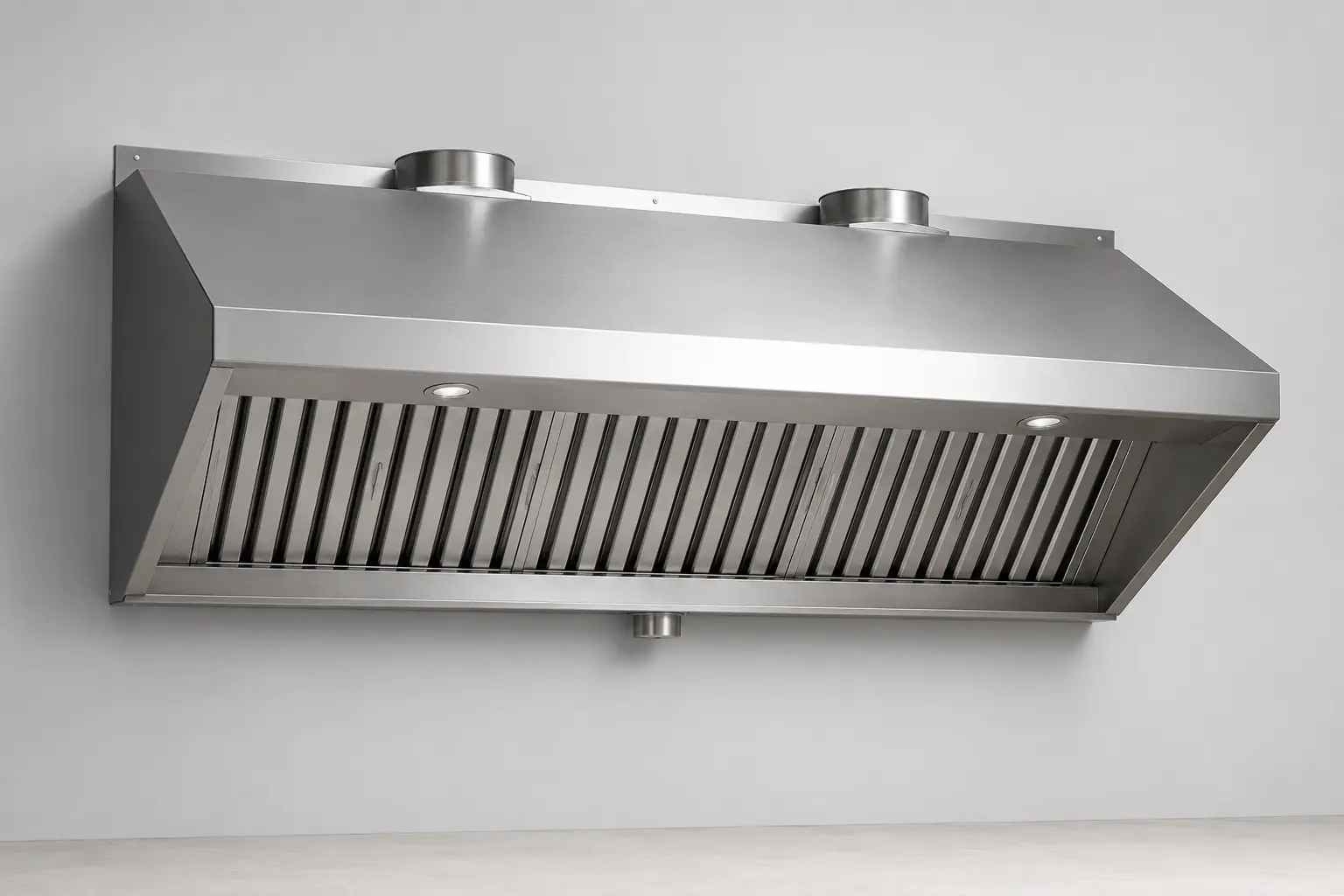
Commercial Wall-Mounted Exhaust Hood
Wall-canopy exhaust hood configurations for commercial cooking lines installed against a wall.
View Details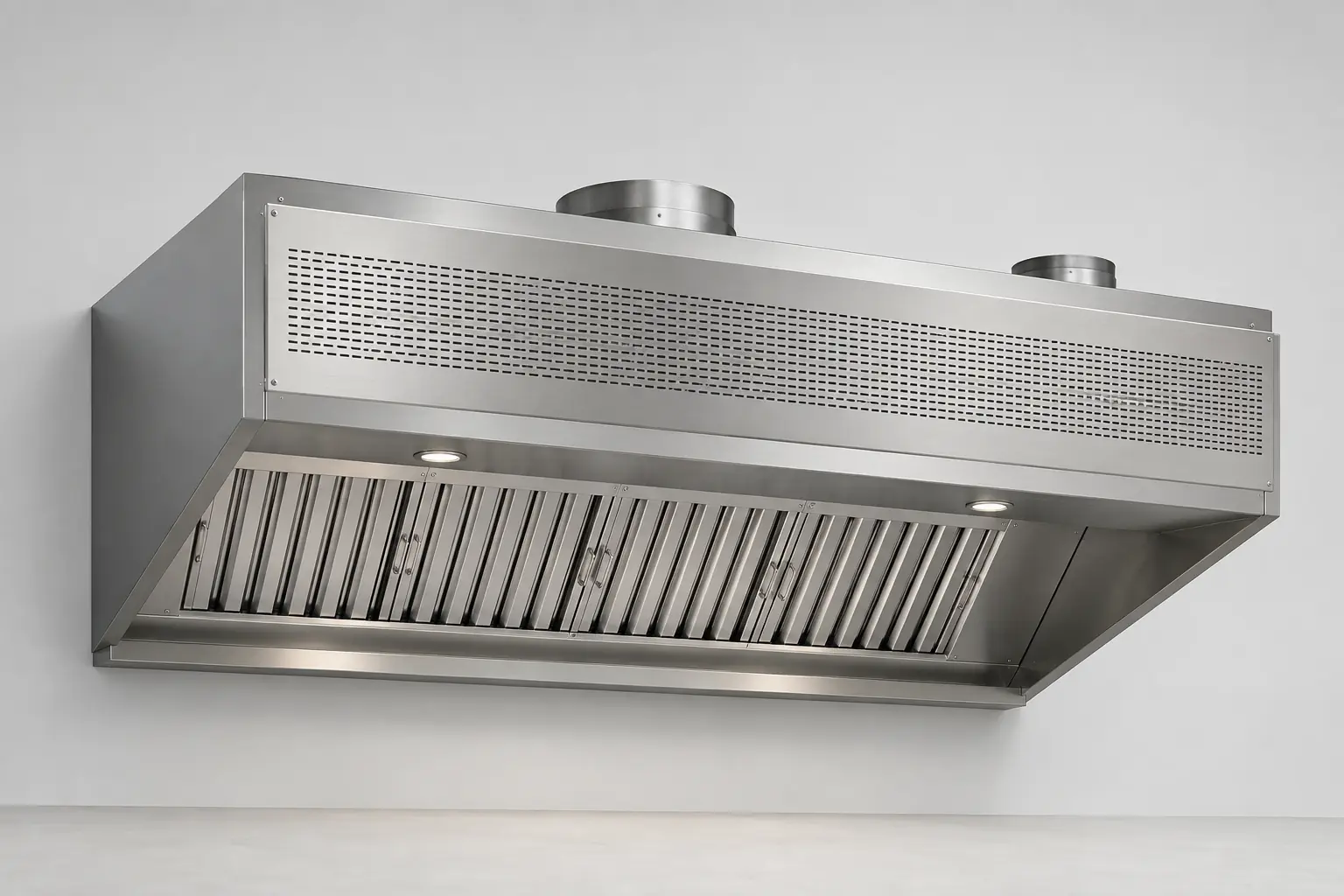
Commercial Kitchen Ventilation Equipment
Commercial Compensating-Air Exhaust Hood
Commercial kitchen exhaust hoods coordinated with low-velocity make-up air for capture and room-pressure control.
View Details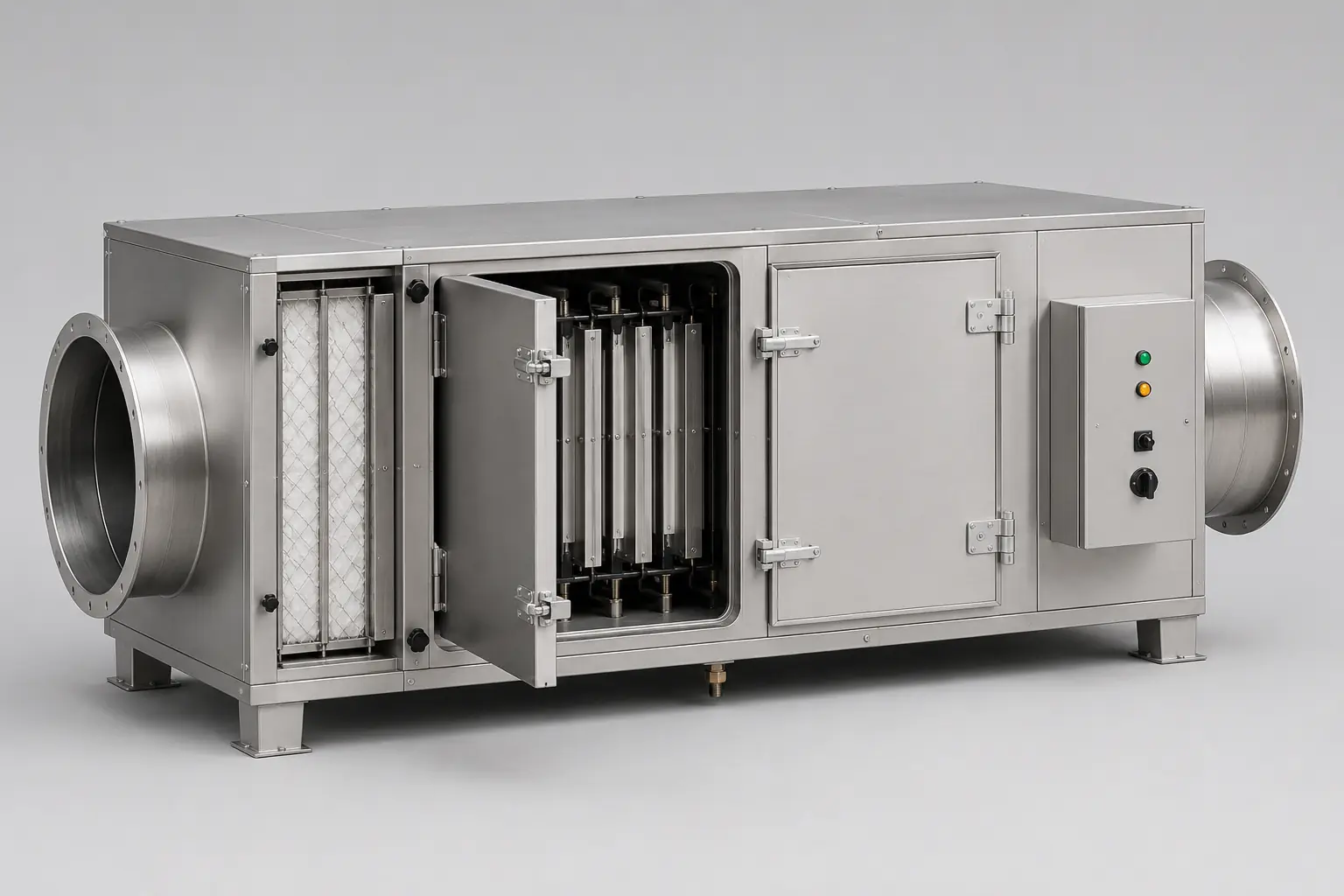
Commercial Kitchen Ventilation Equipment
Commercial Kitchen Air Purification Unit
Modular ESP and packaged pollution-control configurations for particulate and optional odour treatment.
View Details