

PROJECT-CONFIGURED KITCHEN EXHAUST TREATMENT
Commercial Kitchen Air Purification Unit
SourcePro coordinates commercial kitchen air purification units around the exhaust airflow, grease prefiltration, particulate load, discharge constraints, required treatment stages, pressure allowance, cleaning method, drainage, fire strategy and maintenance plan. In-duct ESP and packaged pollution-control formats can be reviewed with optional odour-control stages.
Overview
Product Overview
Kitchen exhaust treatment must be selected for the actual contaminant and site objective. An electrostatic precipitator can reduce aerosol particulate, but performance depends on inlet loading, prefiltration, air velocity, cell condition, cleaning frequency and the test method. Odour control may require separate carbon, UV or other stages, while every added component changes system pressure, maintenance and fire-safety requirements.
Key Features
Key Features
In-duct and multi-module electrostatic precipitator formats
Packaged fan, ESP, wash and optional odour-control paths
Prefilter, ESP cell, access and pressure-monitoring coordination
Manual or automatic wash options by supplier configuration
Drain, wastewater and maintenance-access planning
Indoor or weatherproof outdoor cabinet options
Applications
Where This Product Is Used
Urban restaurants and mixed-use developments
Shopping centres and hotels
Central kitchens and production facilities
Sensitive exhaust-discharge locations
Projects requiring particulate and optional odour treatment
Buyer Benefits
Why Buyers Choose This Type
Defines a treatment train around the real discharge constraint
Modular systems can scale with airflow and site space
Cleaning and maintenance needs are included in early planning
Pressure loss is coordinated with fan selection before quotation
Technical Data
Specifications
Reference Configuration
Modular in-duct ESP; multi-module ESP unit; packaged pollution-control unit; optional automatic wash; carbon or UV odour-control stage; indoor or rooftop installation.
Reference Specifications / Configurations
Planning ranges only. Final values are confirmed for the selected project configuration.
| Configuration | Installation / Service | Length / Width mm | Depth mm | Height mm | Airflow / Capacity | Motor / Electrical Input | Voltage / Frequency | Static Pressure / Controls | Filtration / Drain | Material Reference | Confidence | Public Status |
|---|---|---|---|---|---|---|---|---|---|---|---|---|
| Modular in-duct ESP | Downstream of grease prefiltration | Module specific | Module specific | Module specific | Approx. 2,000–7,500 m³/h per module | High-voltage cells/control cabinet; input confirmed | Common 220–240 V controls; supplier-confirmed | Clean pressure drop often reported below 100–150 Pa | Washable prefilter/ESP cells; drain/access | Coated or stainless cabinet options | Low | Reference only |
| Multi-module ESP air-cleaning unit | Medium/high-volume kitchen exhaust | Project specific | Project specific | Project specific | Approx. 8,000–40,000 m³/h common modular range | Multiple cells; wash/control by series | 220–240/380–415 V may apply; confirmed | Allow dirty-filter and odour-stage pressure loss | Prefilter + ESP; auto-wash optional; drain | Indoor/outdoor modular cabinet | Low | Reference only |
| Packaged pollution-control unit with odour stage | Urban discharge; indoor or rooftop | Project specific | Project specific | Project specific | Up to 32,000 cfm (≈54,000 m³/h) official reference | Integrated fan/ESP/wash/odour options | Project-specific three-phase commonly required | Fan curve includes treatment loading | ESP plus optional carbon/UV; wash/drain/fire options | Factory-built weatherproof/indoor cabinet | Medium | Reference only |
Removal efficiency, pressure drop and odour performance are supplier-rated and test-condition dependent. Final treatment stages, airflow, fan duty, controls, wash/drain, fire provisions and authority acceptance must be confirmed for the specific project.
Project Confirmation
Project Confirmation Checklist
Cooking process and grease load
Calculated airflow
Inlet temperature
Existing prefilter
Target particulate/odour objective
Authority requirements
Available footprint
Pressure allowance
Voltage/phase
Wash water and drain
Wastewater rules
Fire strategy
Maintenance plan and destination
Commercial Kitchen Air Purification Unit FAQ
What does an electrostatic precipitator remove?
An ESP is used primarily to reduce aerosol particulate in kitchen exhaust. Actual performance depends on prefiltration, loading, air velocity, cell condition, cleaning and the test method.
Does an ESP remove cooking odours?
Particulate treatment alone may not meet an odour objective. Carbon, UV or another odour-control stage may be needed after project review.
How often must the unit be cleaned?
Cleaning frequency depends on cooking load, grease prefiltration, operating hours and treatment design. Manual or automatic wash options can be reviewed with a maintenance plan.
Product Inquiry
Request Ventilation System Selection
Share the appliance schedule, kitchen layout, available hood space, duct route, make-up air plan, electrical supply, treatment objective, quantity and destination country. SourcePro will review the requirements and coordinate the next ventilation-system selection steps.
Request Ventilation System SelectionRelated Products
Related Ventilation Equipment
Commercial Kitchen Ventilation Equipment
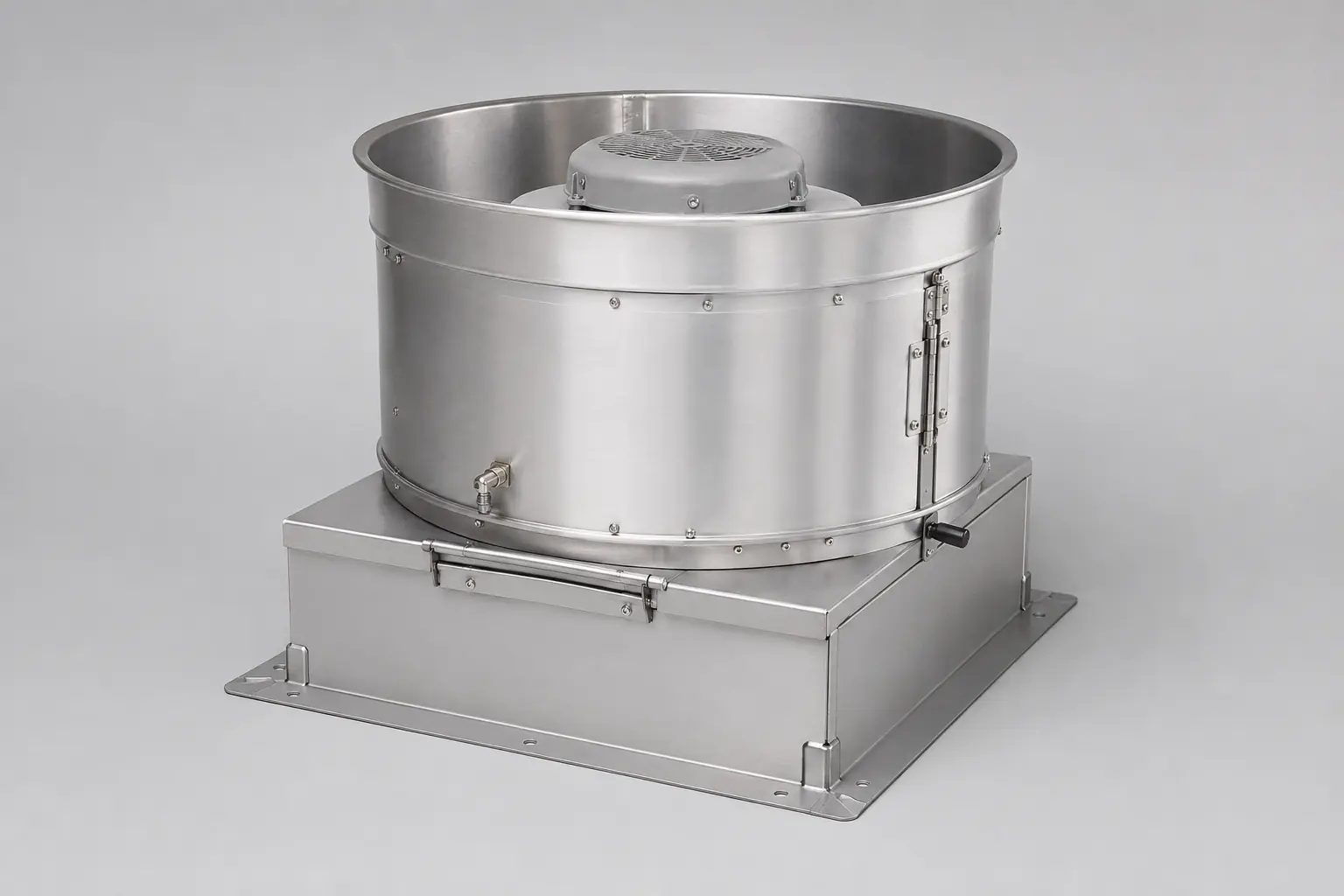
Commercial Kitchen Exhaust Fan
Centrifugal exhaust fan configurations selected by airflow, static pressure, grease duty and installation location.
View Details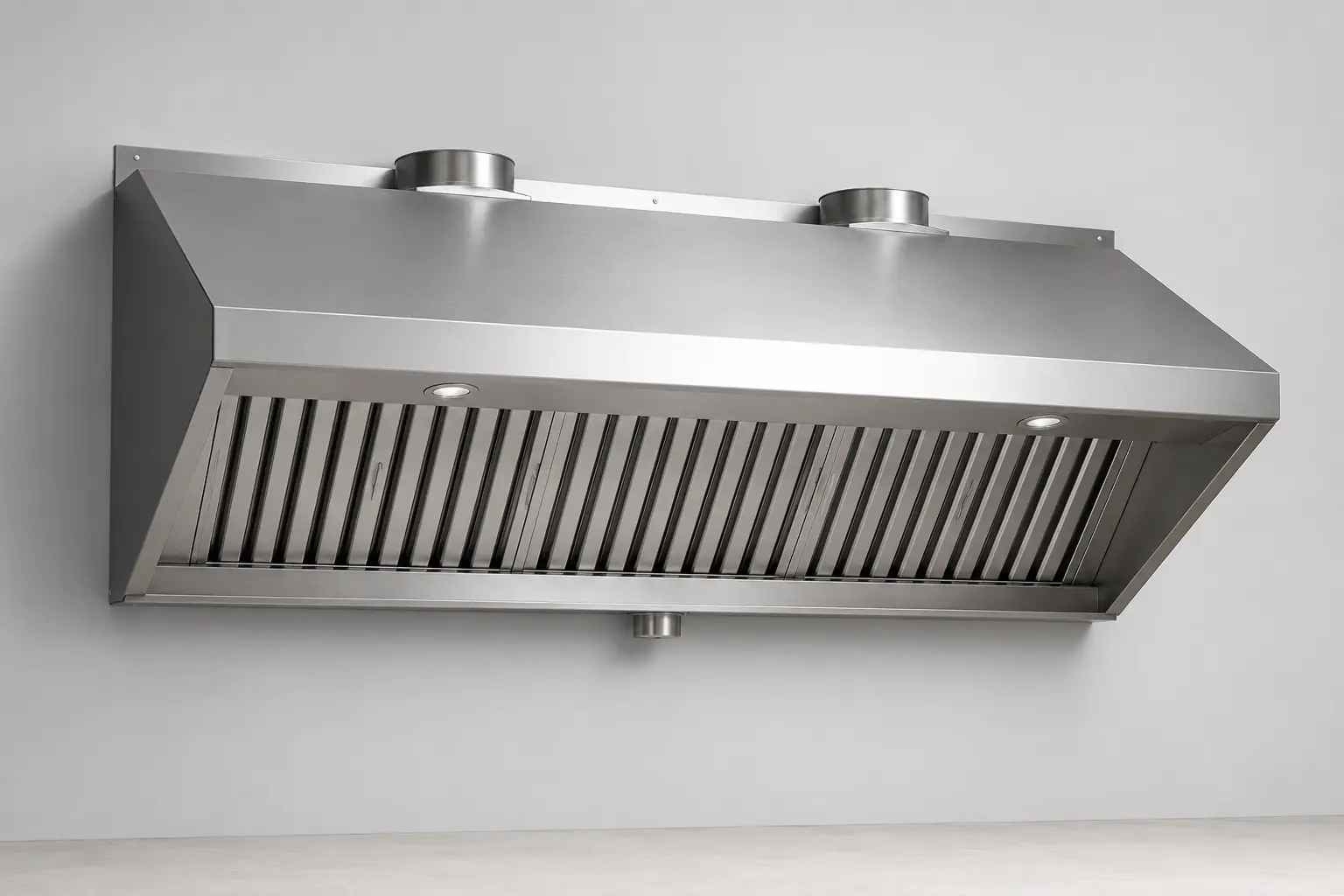
Commercial Kitchen Ventilation Equipment
Commercial Wall-Mounted Exhaust Hood
Wall-canopy exhaust hood configurations for commercial cooking lines installed against a wall.
View Details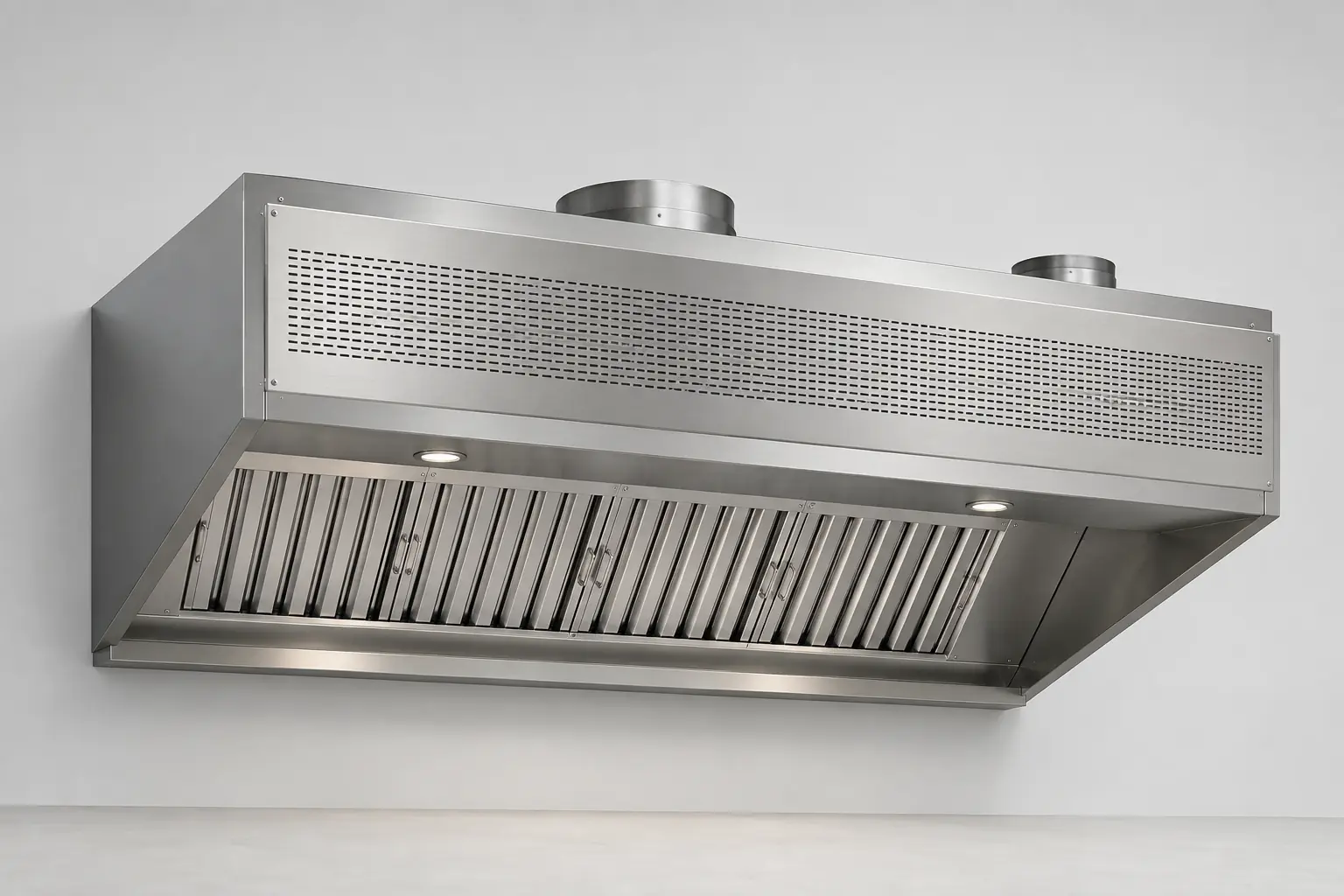
Commercial Kitchen Ventilation Equipment
Commercial Compensating-Air Exhaust Hood
Commercial kitchen exhaust hoods coordinated with low-velocity make-up air for capture and room-pressure control.
View Details